
Group Exhibition | 14-19 October 2025 @ OR SPACE (47 Martello Street, London, UK, E8 3PE)
OVERVIEW
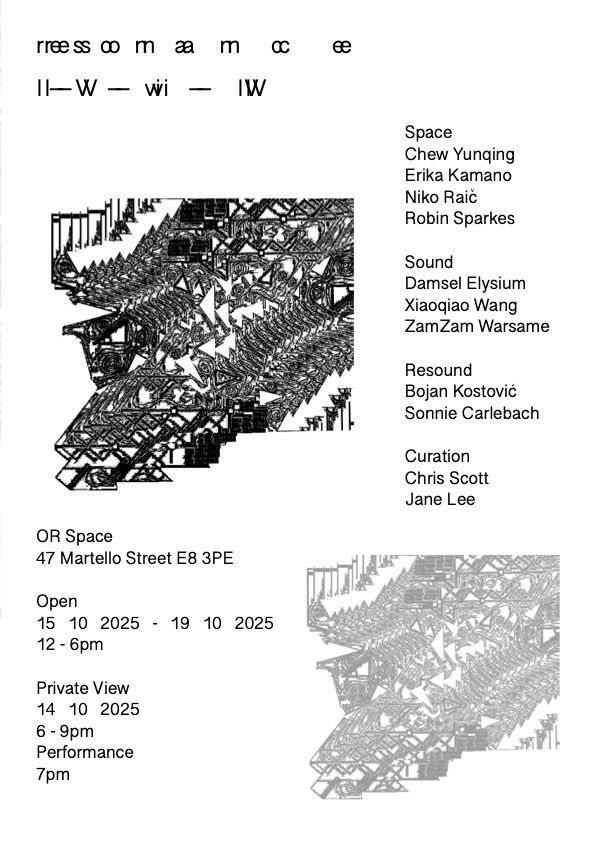
- Duration: 14-19 October 2025, 12 – 6pm
- Private View: 14 October 2025, 6 – 9pm
- Opening Performance: 14 October 2025, 7 – 8:30pm
- Participating Artists: Chew Yunqing, Erika Kamano, Niko Raič, Robin Sparkes
- Performing Artists: Damsel Elysium, Xiaoqiao Wang, ZamZam Warsame
- Resound: Bojan Kostivić, Sonnie Carlebach
- Curator: Jane Lee, Chris Scott
- Exhibition Catalogue
Timothy Hecker’s The Era of Megaphonics: On the Productivity of Loud Sound discusses how technologies between 1880 and 1930, such as foghorns, pipe organs, or controlled detonations, produced sound as a force rather than a byproduct. These mechanical sounds generate intensity through amplification and scale, differentiating themselves from mere ‘noise’. Similar to a sonic pressure wave, the ‘loudness’ of a sodium lamp is beyond just a bright light. A photonic surge that saturates space with concentrated frequency propagating through a room.
Amid the hum of industrial noise and the glare of artificial light, Resonance (I–V–vi–IV) orchestrates a polyphony of light and sound. Chew Yunqing, Erika Kamano, Niko Raič, and Robin Sparkes demonstrate an inquiry into how energy moves and transforms across material and immaterial forms. Addressing the historicities between industrialisation and digitalism, the artists in this exhibition employ methodologies to explore the potential of frequency as medium.
Resonance, from the Latin ‘resonare’, meaning ‘to resound’, describes the response of one object vibrating due to another’s vibration. Resonance begins as a physical phenomenon but extends into memory and repetition, carrying energy across time. Within the dichotomy of sound and light, resonance becomes a notation. The intensities of sound and light are traced, refracted, and framed as a kind of microphone for light, an aperture for sound.
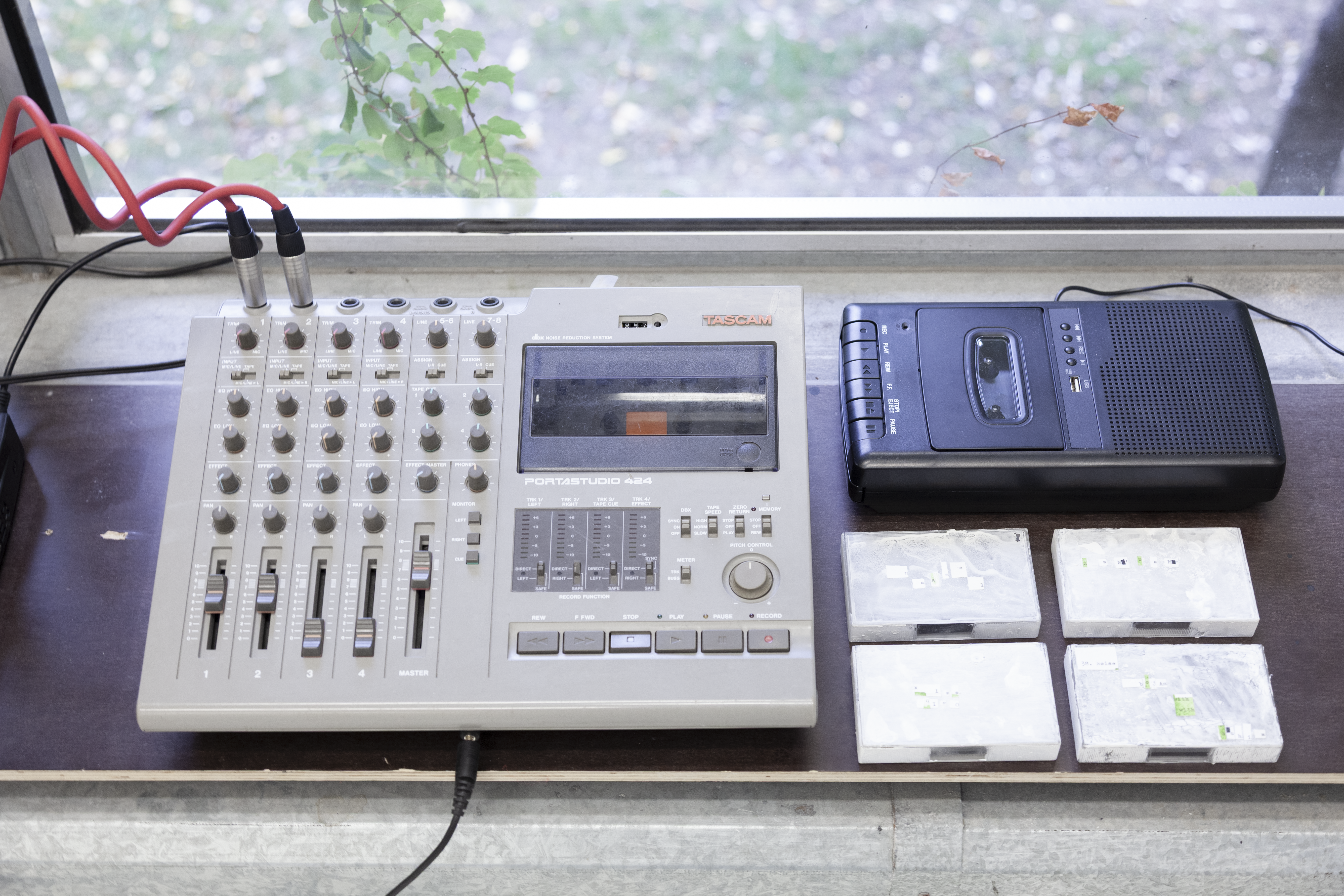
Damsel Elysium, Xiaoqiao Wang, and ZamZam Warsame open the opening night. Each live performance is recorded on tape by Sonnie Carlebach and Bojan Kostivić. The 1/1 recordings will be listed among the artworks in the exhibition catalogue.
Exhibition Highlights include:
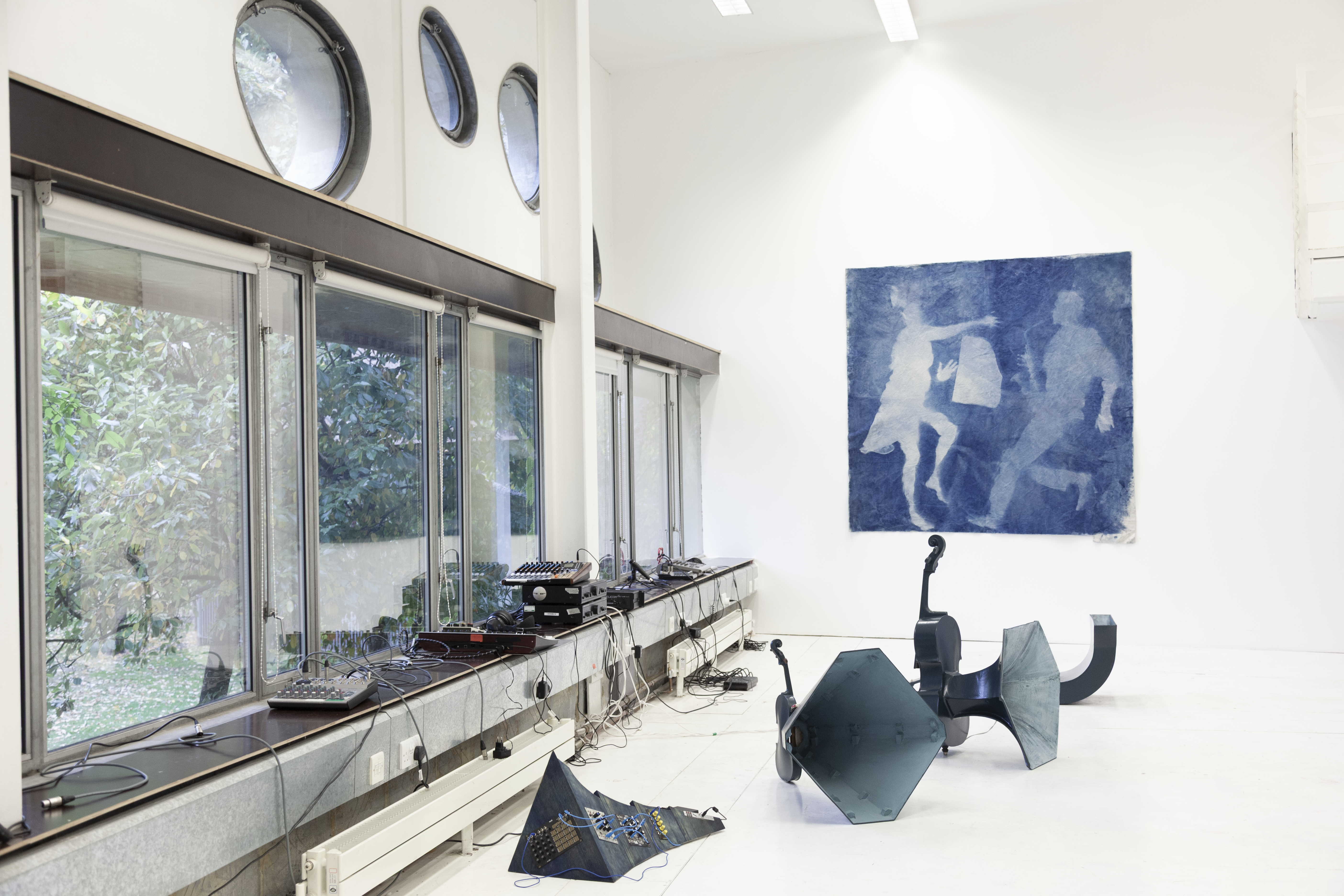
- Light, Sound, Gesture: The flow of daylight across Chew Yunqing’s solar sculptures provides the experience of circadian rhythms. As daylight shifts, so do the positions of the sculptures (with the help of visitors and performers), emphasizing their interaction with the works of Niko Raič and Erika Kamono.
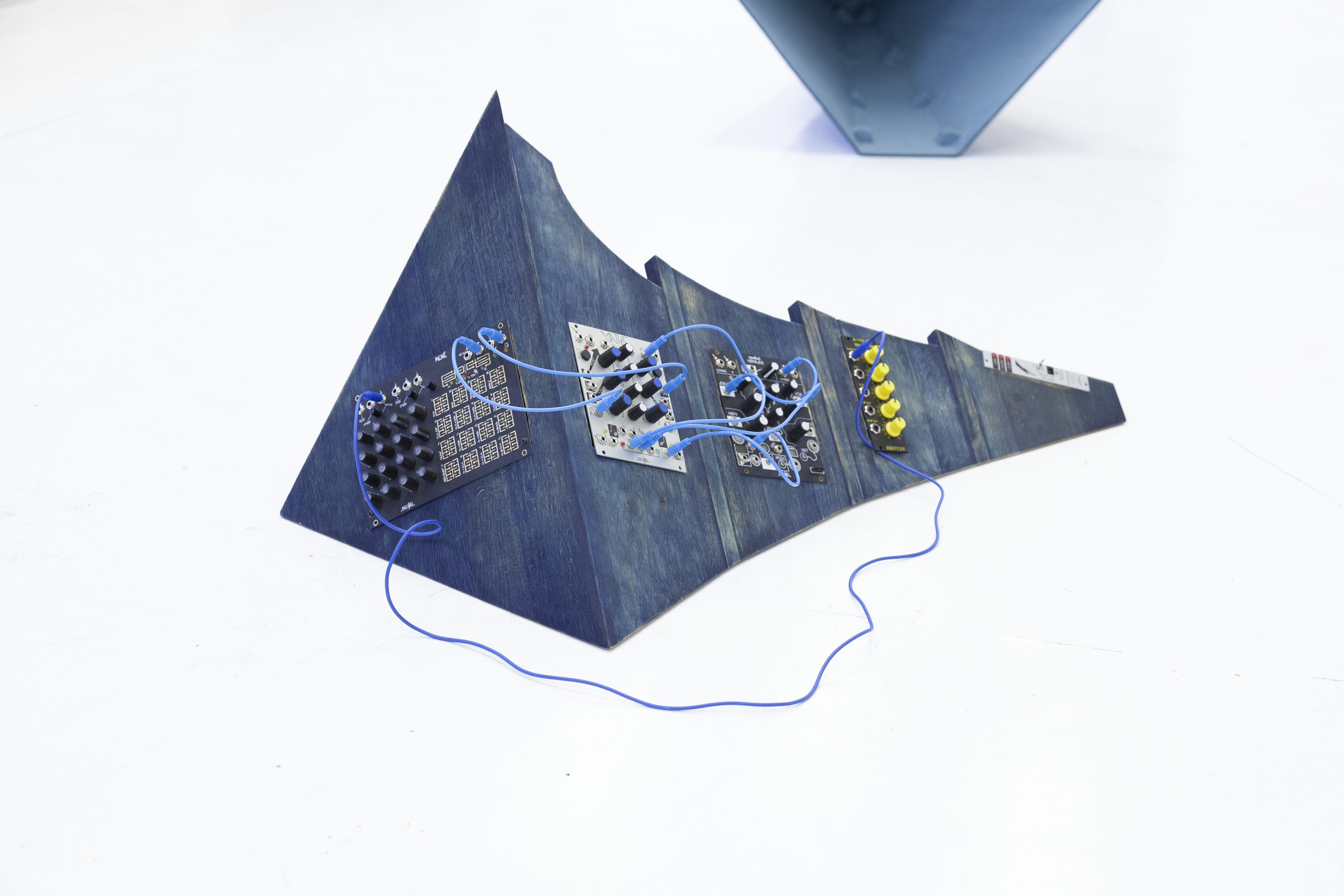
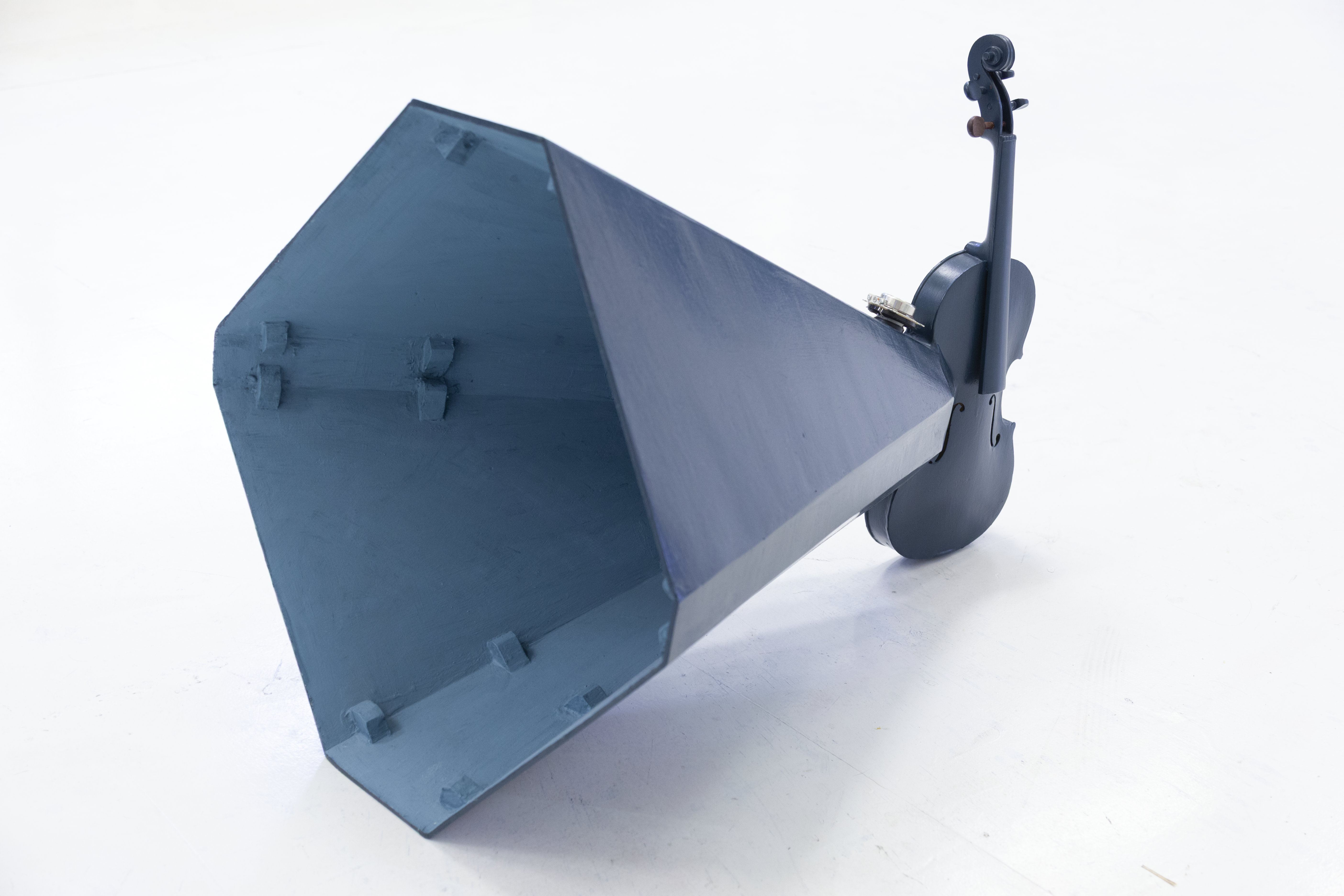
- Sonic Circulation: Instrument-speakers created by Robin Sparkes will play meditative trills through the space, featuring sculptural furnishings that encourage positions that open the body to listening.
- Opening-Night Interventions (14 Oct 7PM): Live sonic activations by Damsel, Xiaoqiao, and ZamZam explore the gravitational pull of the I–V–vi–IV progression as it carries listeners through sonic space. The performances will be remediated and recorded live on tape.
ABOUT THE WORKS
Robin Sparkes – String Series
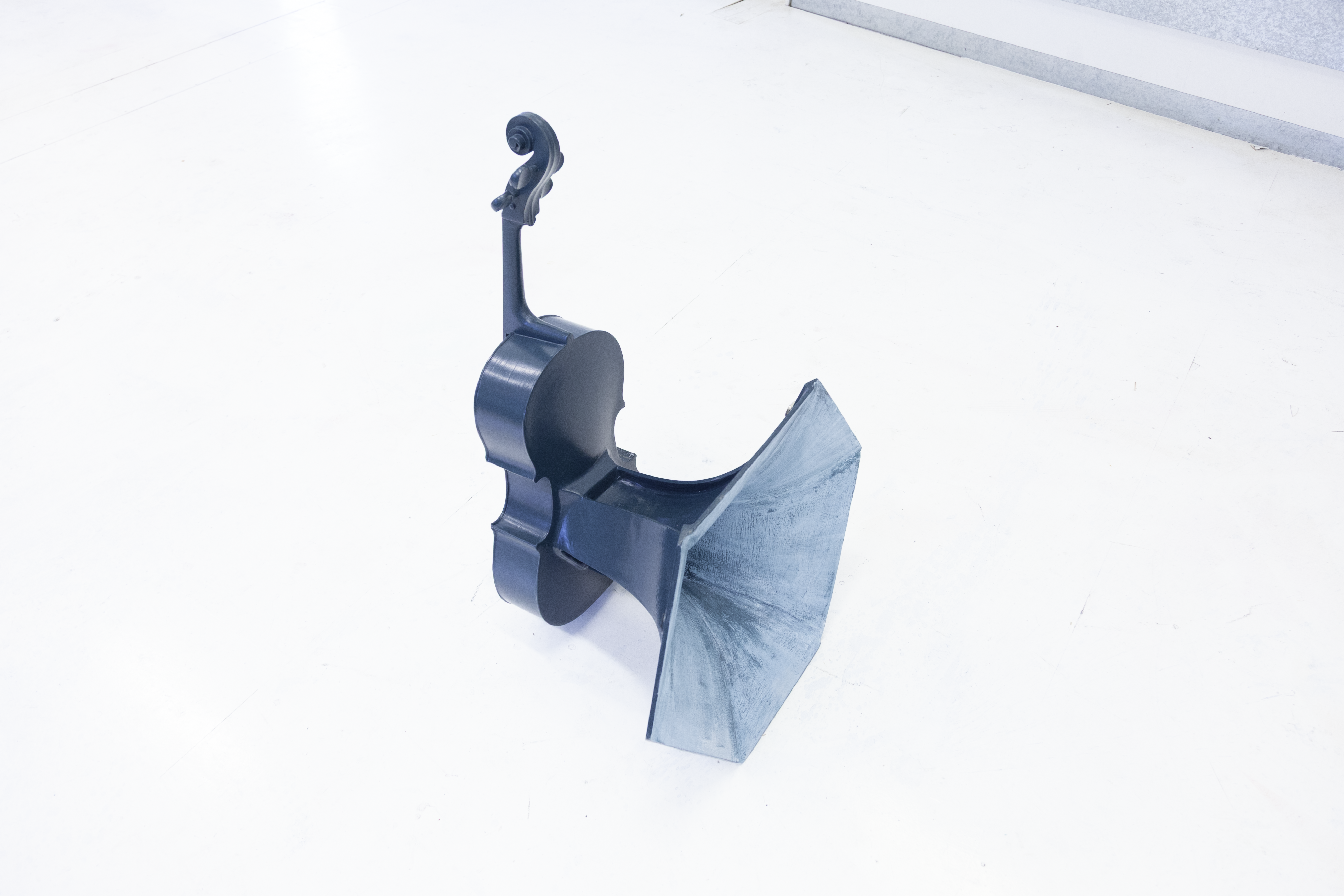
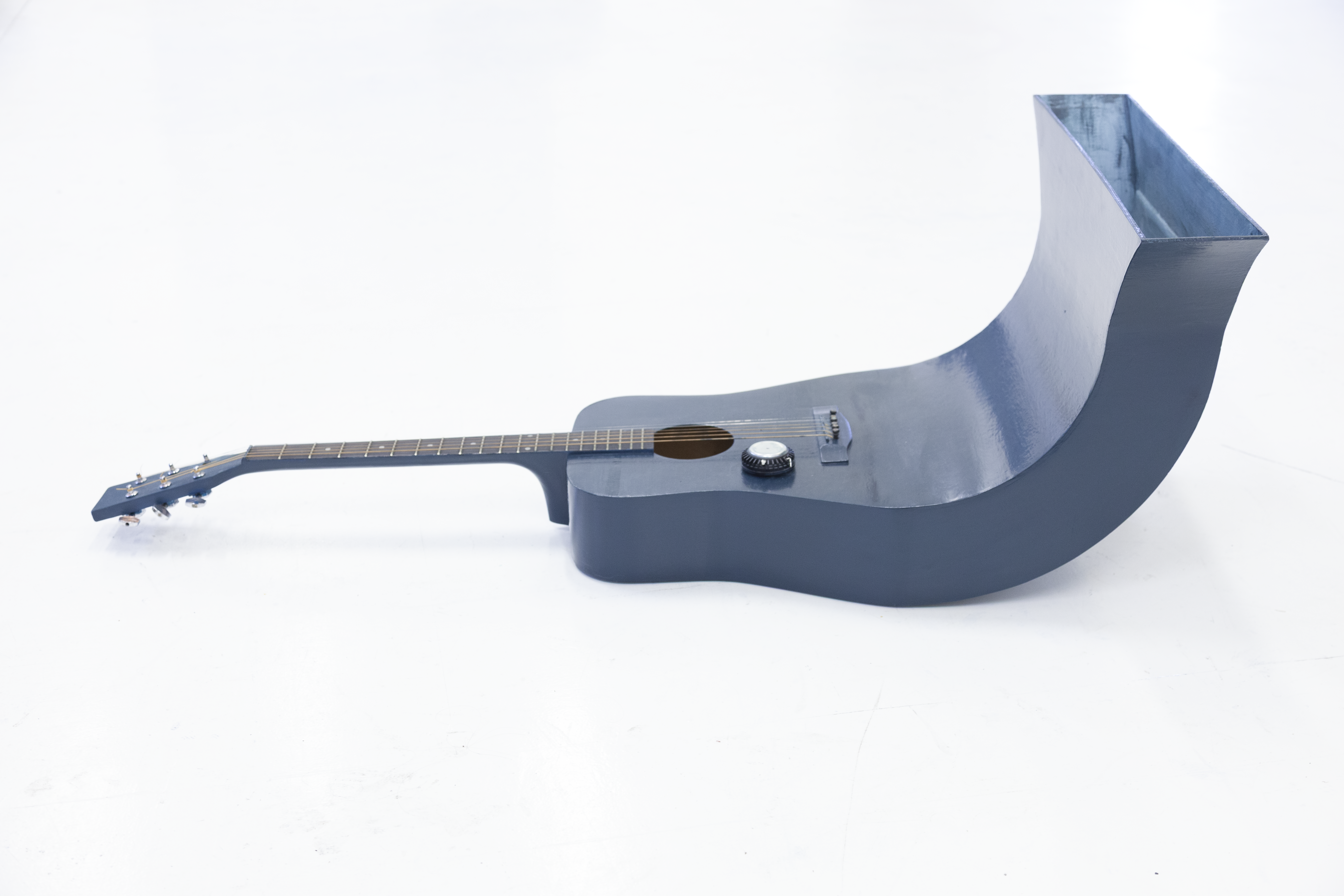
Robin’s string series reimagines classical instruments as sonic sculptures, evolving their forms to investigate how sound propagates through space. Drawing on her ongoing research into the intersection of sound, architecture, and spatial perception, the series explores how acoustics, both material and immaterial, shape experience. By augmenting violins, cellos, and guitars with funneling geometries that amplify high frequencies, Robin examines how sound moves through varying spatial configurations. Each sculpture performs as a speaker cabinet, transforming frequencies, expanding the auditory field, and tracing sound’s electroacoustic resonance.
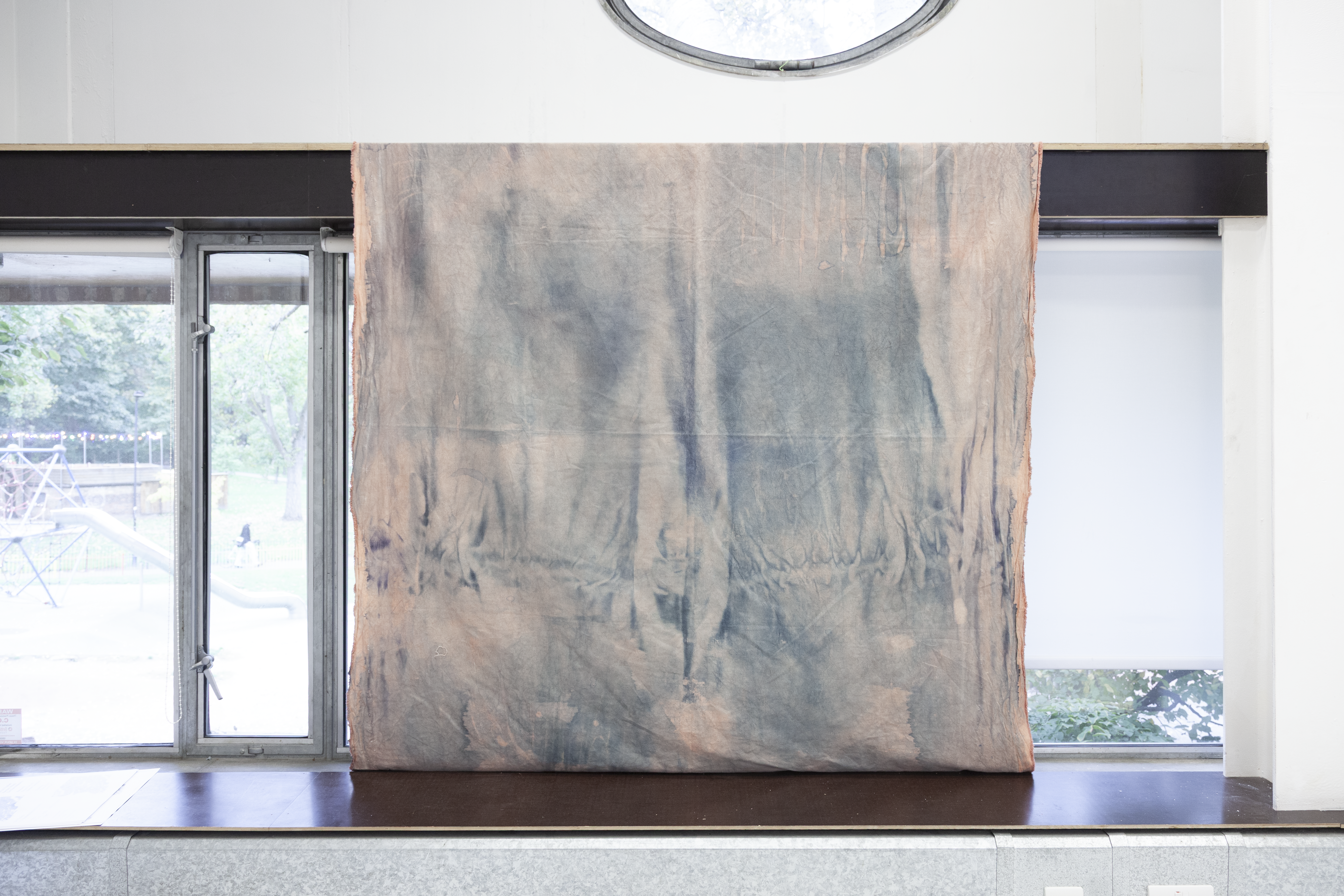
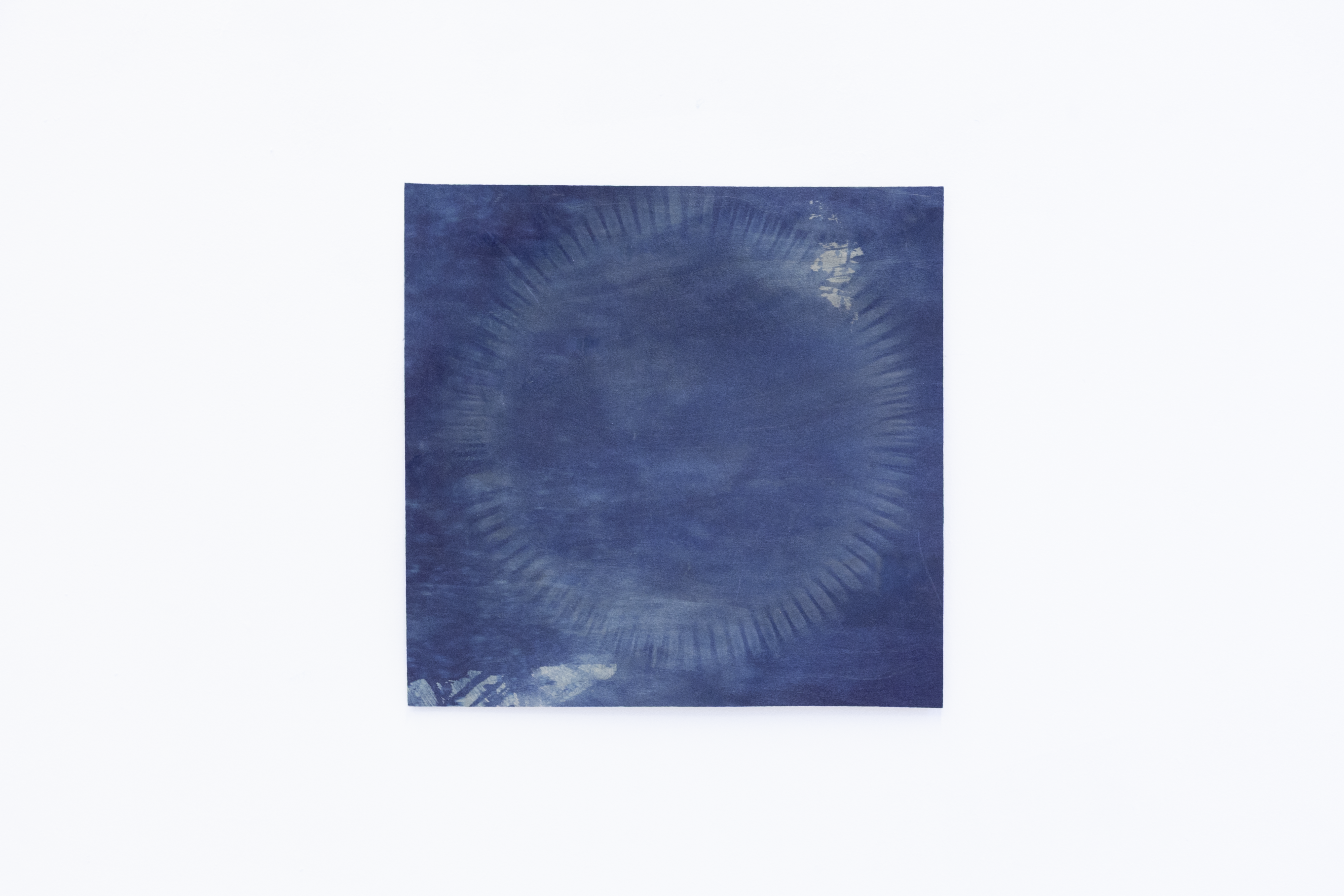
Niko Raič – Phantom Maps (Cyanotypes)
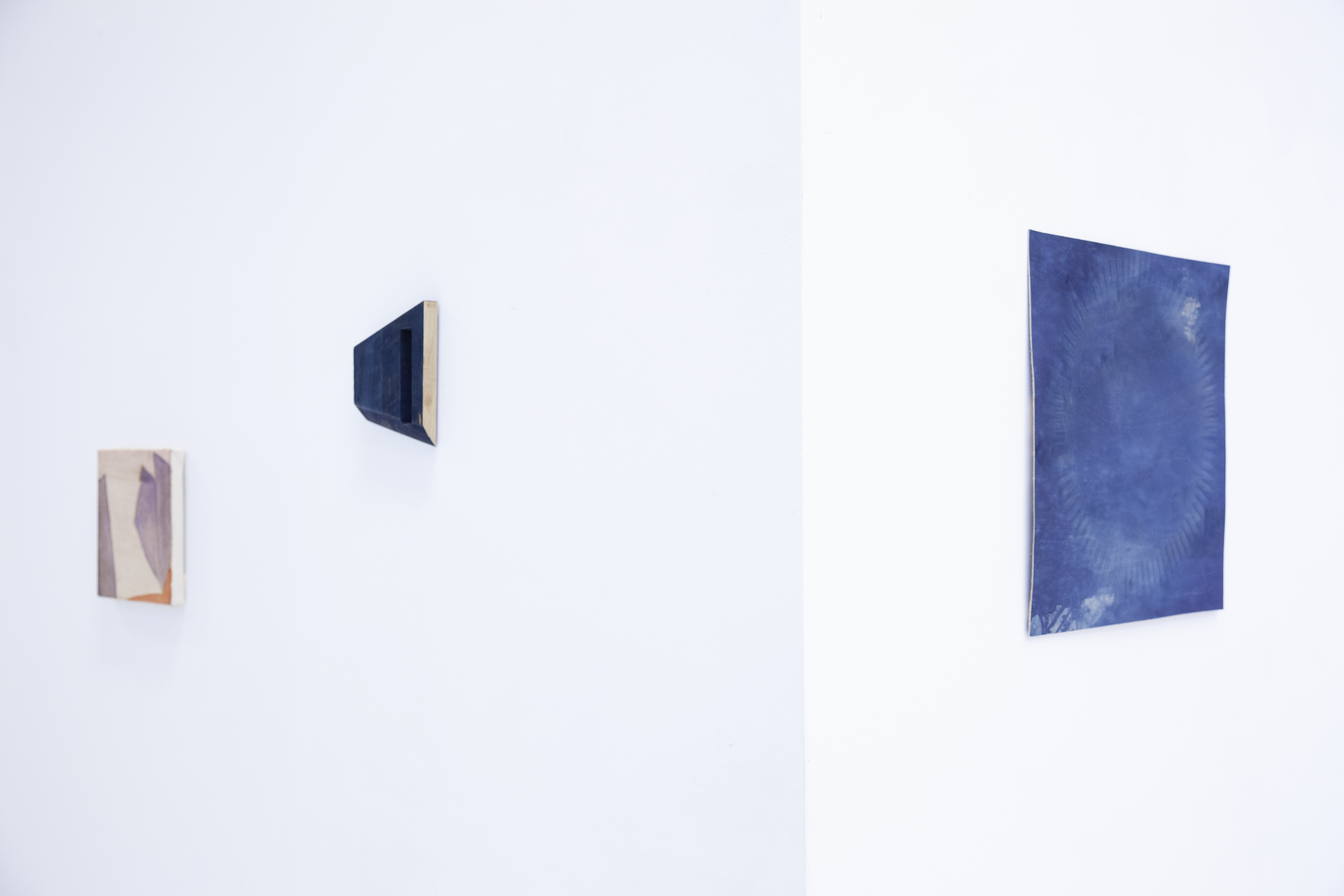
Raič collaborates with diverse participants to produce site-specific cyanotype Phantom Maps on transmissive materials such as silk, canvas, wood, paper, and glass. These works document light’s movement through space, embodying a nomadic perspective where bodily movement and spatial experience are primary. The cyanotype process, dependent on UV radiation yet adaptable to overcast conditions, functions as a material imprint: each print physically records its environmental context.

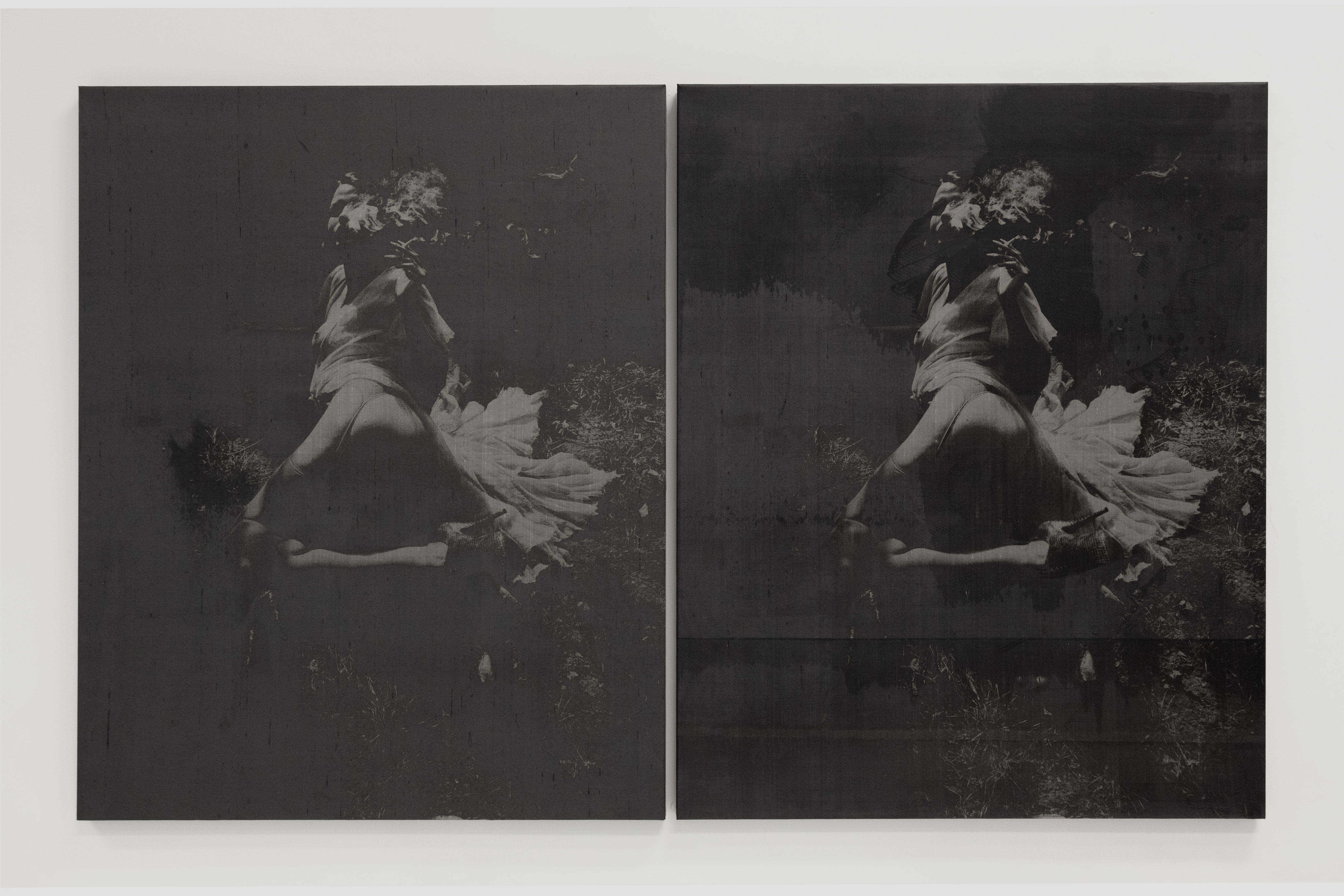
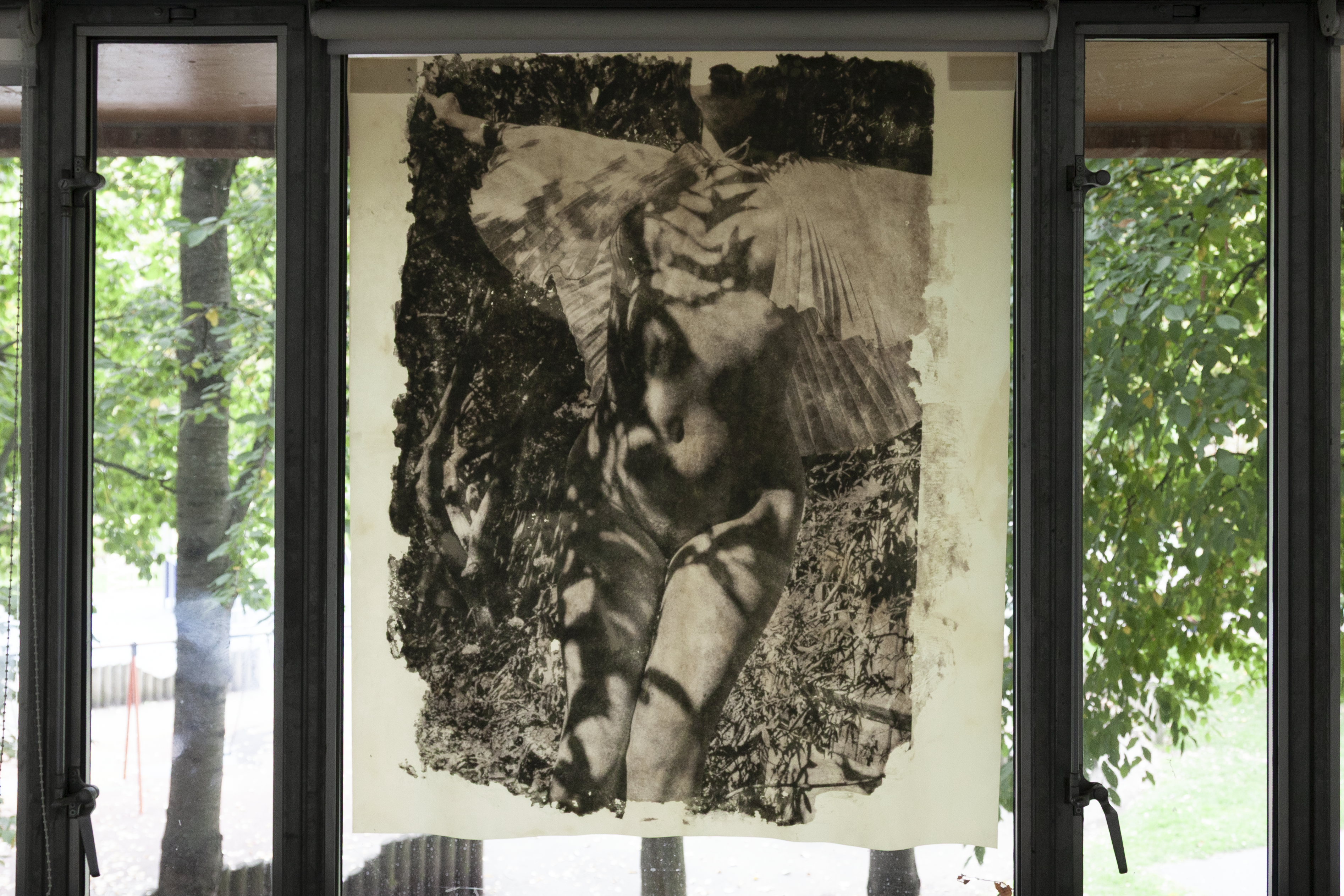
Erika Kamano – Photo Transfer
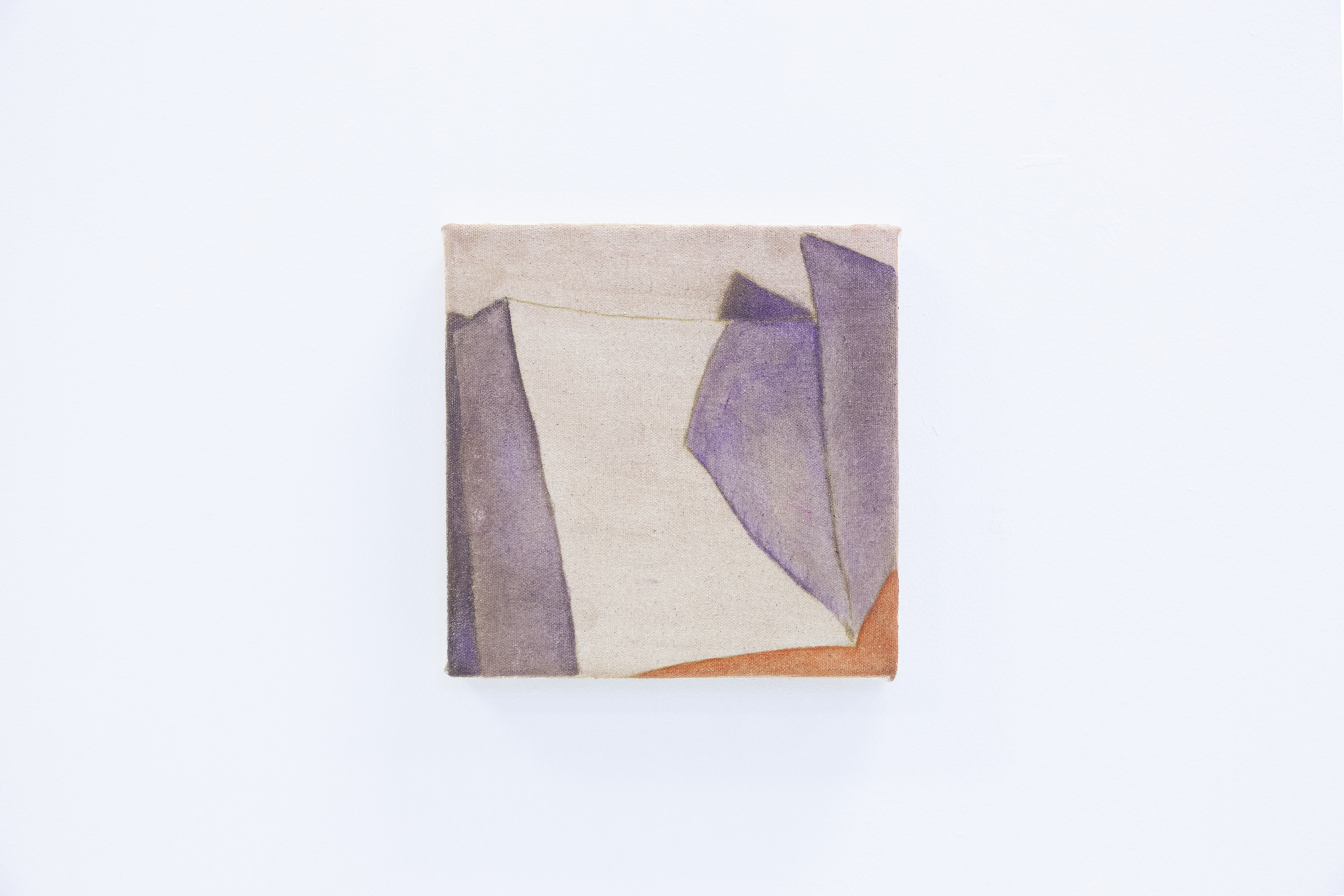
Erika Kamano’s photographic work embodies cinematic color palettes with a sense of surreal intimacy in each composition, light, shadow, and contrast. Her works evoke a sense of both atmosphere and historical resonance in the objects she prints upon. Her cyanotype and UV prints transferred onto three-dimensional objects amplify her eye, infusing physical form with the same cinematic depth of texture.
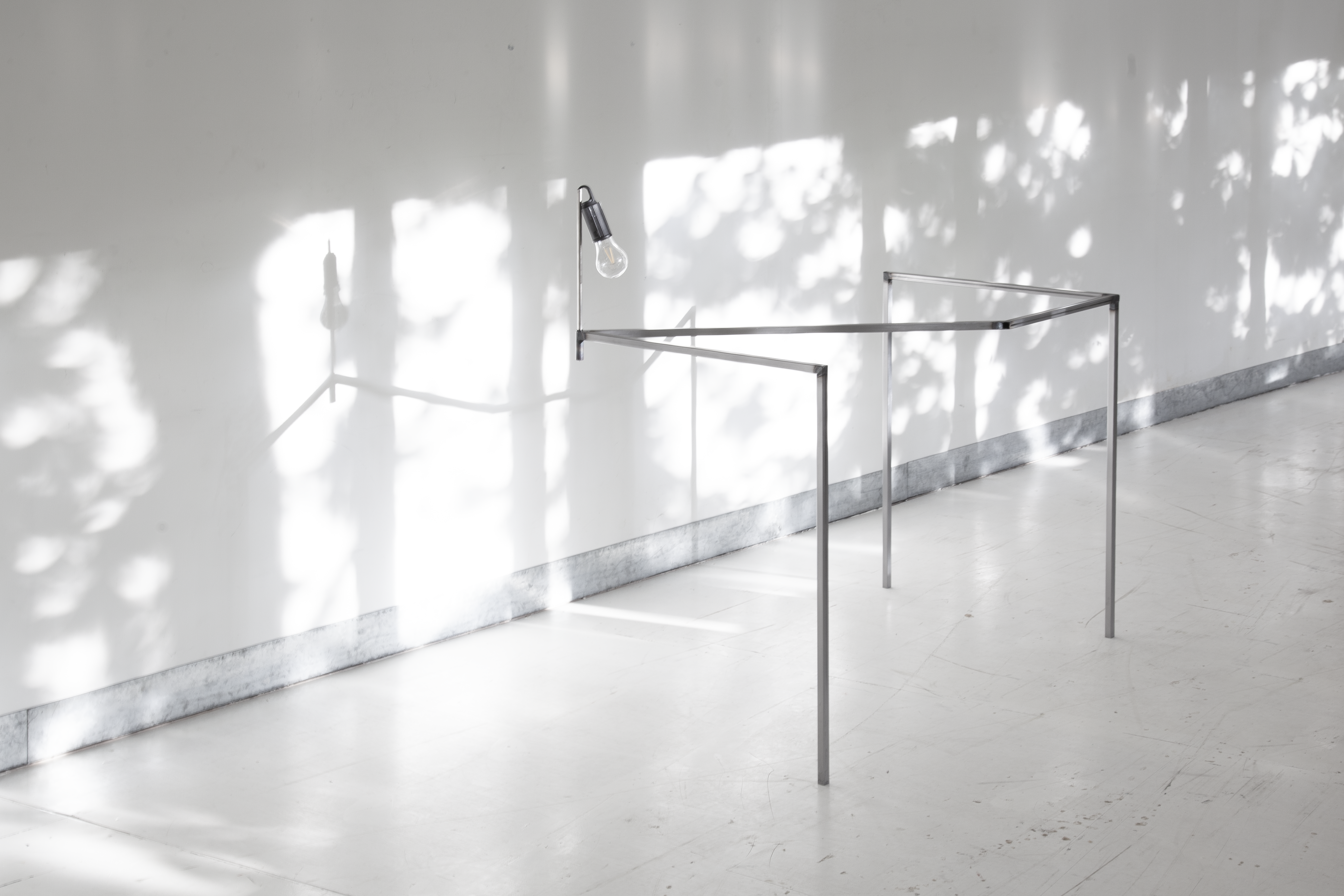
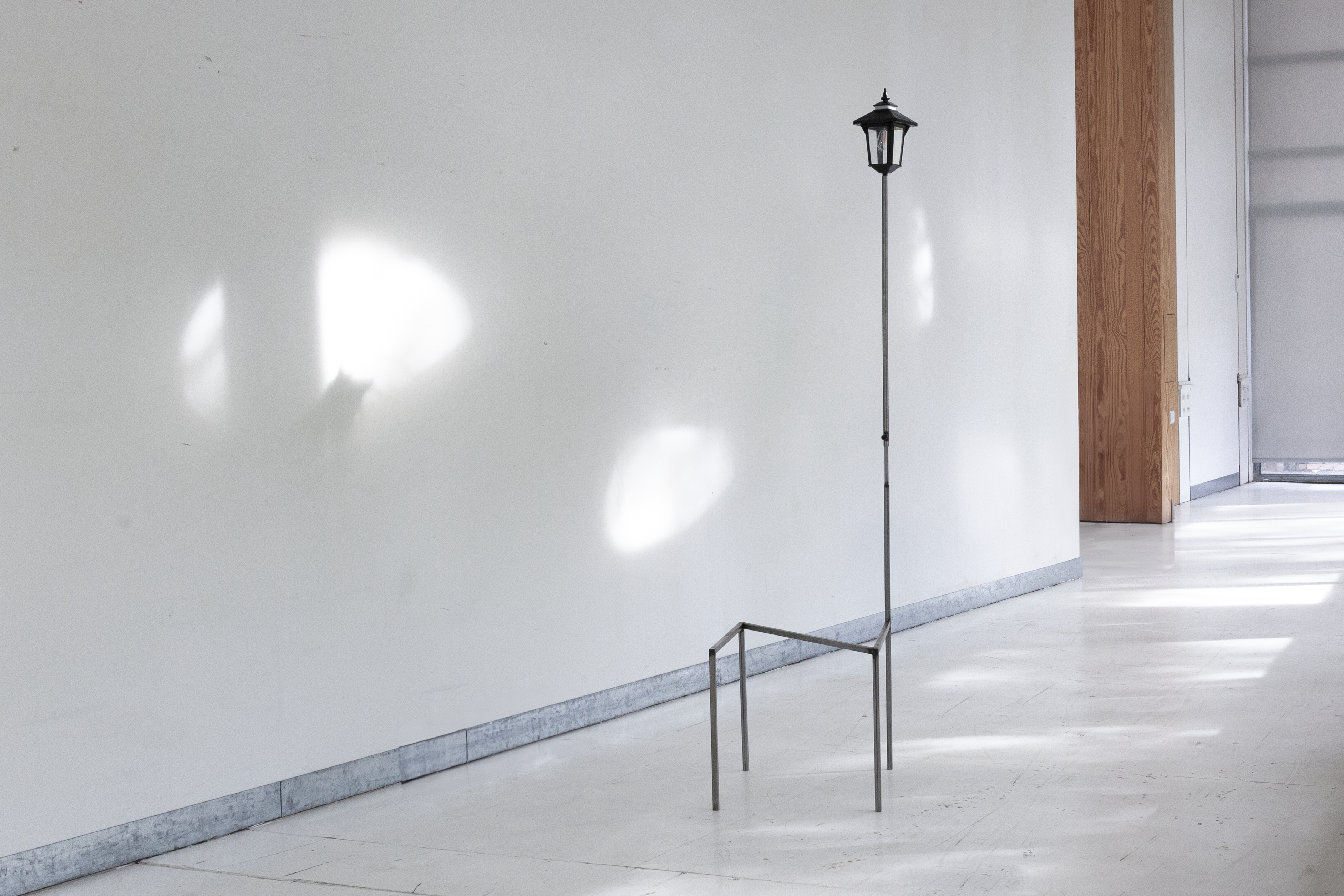
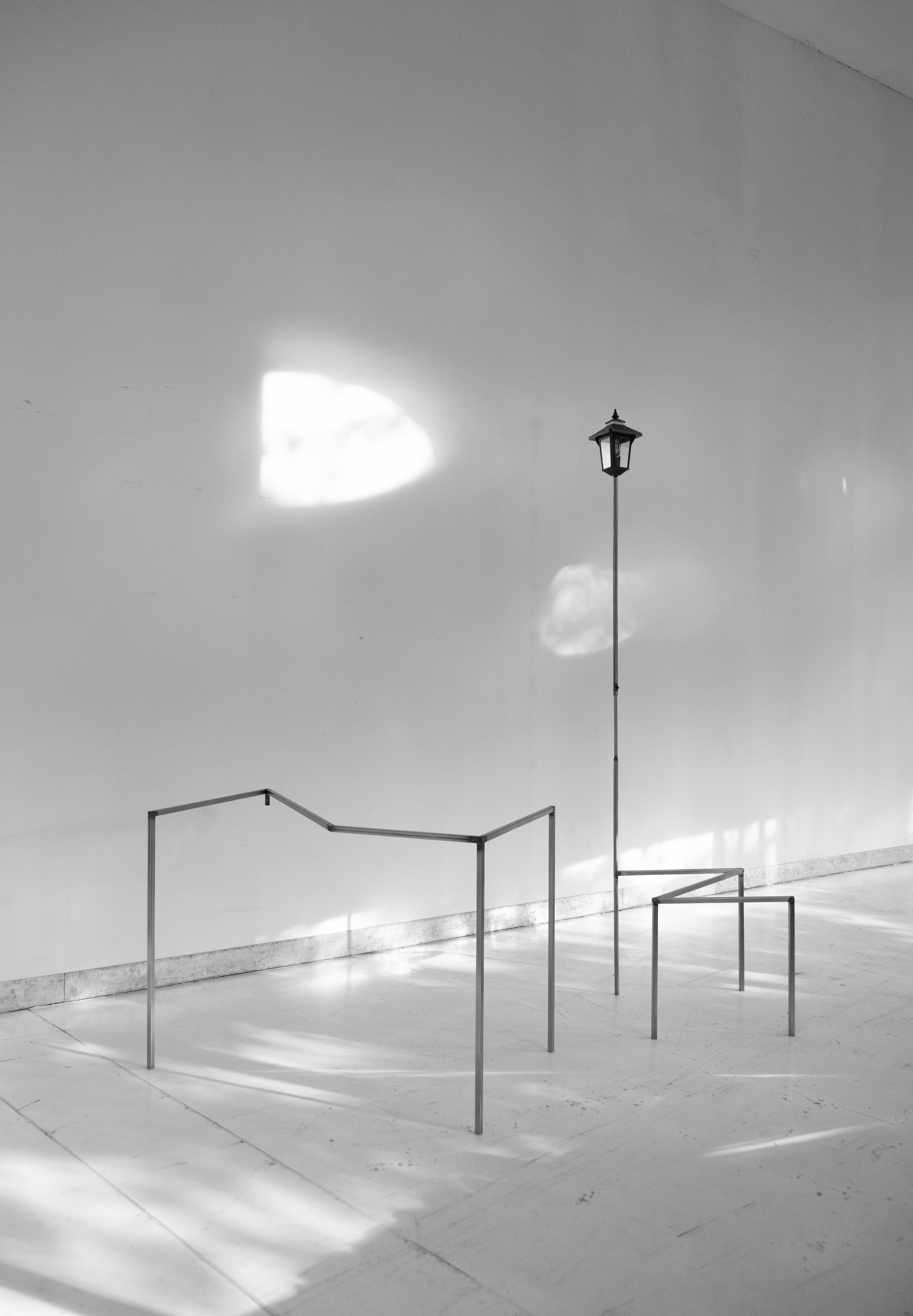
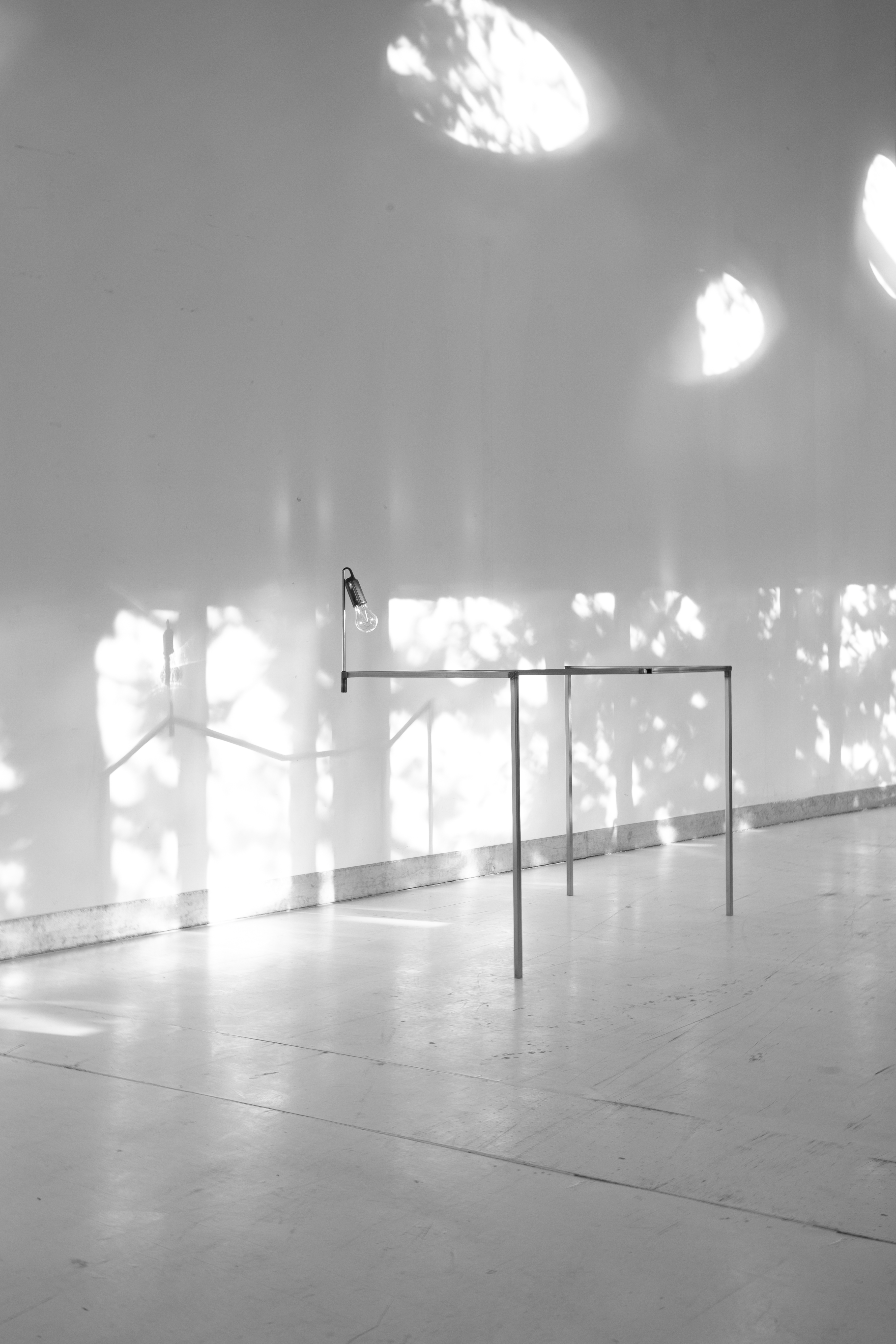
Chew Yunqing – SPACE_OBJECTS
SPACE_OBJECTS is an ongoing series that questions what a deeper correspondence between space, forms, and activity can be like beyond what generically saturates us. Open without an end, they have the capacity to change. Life animates its evolution.
SPACE coincides with OBJECT, its geometries interpolate; SPACE acquires an agility, operable so that we can easily affect it (a facility we lack in a world proliferating with rigid environments and standardization); SPACE is given for indeterminacy and change, always incomplete so it may ‘finalize’ each time according to circumstance: having ‘grown’ a Victorian solar lamphead from a previous exhibition context on the rights to appropriate public streets in London, these solar light forms convert the movement of sunlight through the OR space into a nocturnal presence, extending the dialogue between natural rhythms and constructed atmospheres. During the day, they absorb as much direct sunlight as possible. As the path of sunlight changes across the day, lengthening into the depths of the space, so do the positions of the lamps. In the evening, they are freely repositioned according to the evening’s programme, activating the gallery space after dark.
I–V–vi–IV – Performance on October 13th by Damsel, ZamZam, and XiaoQiao
14 October 2025, 7 PM A chord progression is a purposeful sequence of chords arranged to create the harmonic foundation of a musical composition. Among the most widely used progressions across both classical and popular music is the I–V–vi–IV progression.
In classical repertoire, particularly from the Romantic and Classical eras, this progression often appears with nuanced variations in voice leading and harmonic rhythm. In popular music, it has become a staple found in countless hits spanning multiple decades, thanks to its emotional versatility and memorable sound.
The artists in this performance explore positions that echo the contrapuntal relationships inherent in the I–V–vi–IV chord progression. Their engagement with space and sound reflects a compositional approach, one that employs both light and acoustics to interpret and transform the environments they inhabit. Just as the melodic pull and gravity of the I–V–vi–IV progression carries with it a rich legacy of emotional, political, and cultural resonance, these artists examine the OR-Space as a multidimensional notational system, reimagining it as both a conceptual and experiential framework for their work.
ABOUT THE ARTISTS
Robin Sparkes (b.1995) is an artist and acoustic spatial designer. Her practice explores the kinesthetic experience of space, inquiring movement, temporality, and sound by investigating how bodies inhabit and perceive space. Rooted in critical inquiry and embodied experience, her work unfolds through writing, sound, and architectural research. She completed her Part II MA in Architecture at the Royal College of Art, following studies in the history of architecture at MIT and a BFA in Critical and Cultural Studies with a minor in Curatorial Studies from Emily Carr University.
Niko Raič (b.1999) explores transformation through layered painting, experimental printmaking, and live performance. Drawing from music theory, phonetics, and physics, his work investigates perceptual thresholds in sound and image. He incorporates refracted light, flowing water, and stochastic processes as both material and metaphor. Recent projects include his solo presentation ‘We are only our monuments’ at the Museum of Czestochowa (2024, PL), his solo presentation ‘The light the day gave’ at Brompton Cemetery Chapel (2024, UK), and the staging of his performance ‘Muzyczna Kolacja’ at the Museum of Modern Art in Warsaw (2023, PL).
Erika Kamano (b.1994) is a photographer whose work blends fashion, portraiture, and cinematic storytelling. Drawing from her multicultural background, born in Hawaii and raised in northern England, her imagery explores themes of identity, contrast, and emotional resonance. Kamano’s photographs are known for their rich textures, bold use of light and shadow, and a dreamlike quality that invites reflection. Her work often captures the space between reality and imagination, creating visual narratives that feel both intimate and surreal. Kamano has been published in magazines including Dazed, W Magazine China, CR Fashion Book, Re-Edition Magazine, and Acne Papers. She has been commissioned by brands such as Marc Jacobs, Mugler, Givenchy, and Fendi.
Chew Yunqing (b.1998) works between the theoretical and tangible, experimenting with conditions, structures, and formats to cultivate possibilities for understanding that mediate with the bodily, the local, and the accidental. Her works materialize across spaces, scenarios, objects, and writing. She holds an MA in Architecture from the Royal College of Art. In 2024, she founded Don’t Matter Labs, a research platform that questions what really matters. Chew’s recent work includes the exhibition of ‘Second-hand Origins’ in Singapore Design Week 2025. With Spatial Anatomy, she designed the S.E.A Focus exhibition in Singapore Art Week 2025, and Beauty (Meta) World was featured at the Singapore Pavilion at Venice Biennale 2023. Her writing has been published by the Singapore Architect journal.
CURATORS
Jane Lee is Director of Muon, an art consultancy based in Seoul and London. Formerly curating and managing cultural programs with Nam June Paik Art Center (KR), Studio Roosegaarde (NL), Cool Hunting (US), National Heritage of Culture (KR), and Punto Blu (KR–UK), Lee develops international, interdisciplinary projects spanning public art, live activations, and spatial art direction, with a focus on resonance across virtual and physical contexts. She is currently conducting research on sustainable business models in the arts and the socio-cultural identity of contemporary Korean artists.
Chris Scott is a curator and producer with extensive experience in contemporary art and fashion, having produced internationally acclaimed exhibitions in cities such as Tokyo, Los Angeles, Mexico City, Taipei, Seoul, and Jakarta. He has also worked on collaborations with artists and brands, including Givenchy, Supreme, ASICS, and Neighborhood. Currently, he is launching a new project called Emergency Gallery, a nomadic gallery platform opening during Tokyo Art Week 2025.
MEDIA
 Jane Lee