
Inspired by Tradition, Driven by Innovation
Ferrari and COOL HUNTING collaborate with contemporary Korean artists, creating a one-of-a-kind 12Cilindri Tailor Made honoring Korea
Over the past decade global fascination with Korea has continued to grow intensely. And yet, the question “What does it mean to be Korean?” remains.
Ferrari’s 12 cylinder engine embodies unity through force. Independent components converge into a single, continuous surge of power. This principle finds a natural parallel in Korea, a nation defined by synthesis and forward momentum. As K-content and Hallyu recombine diverse cultural symbols into new global forms, Ferrari’s 12Cilindri unites individual energies into one explosive motion.
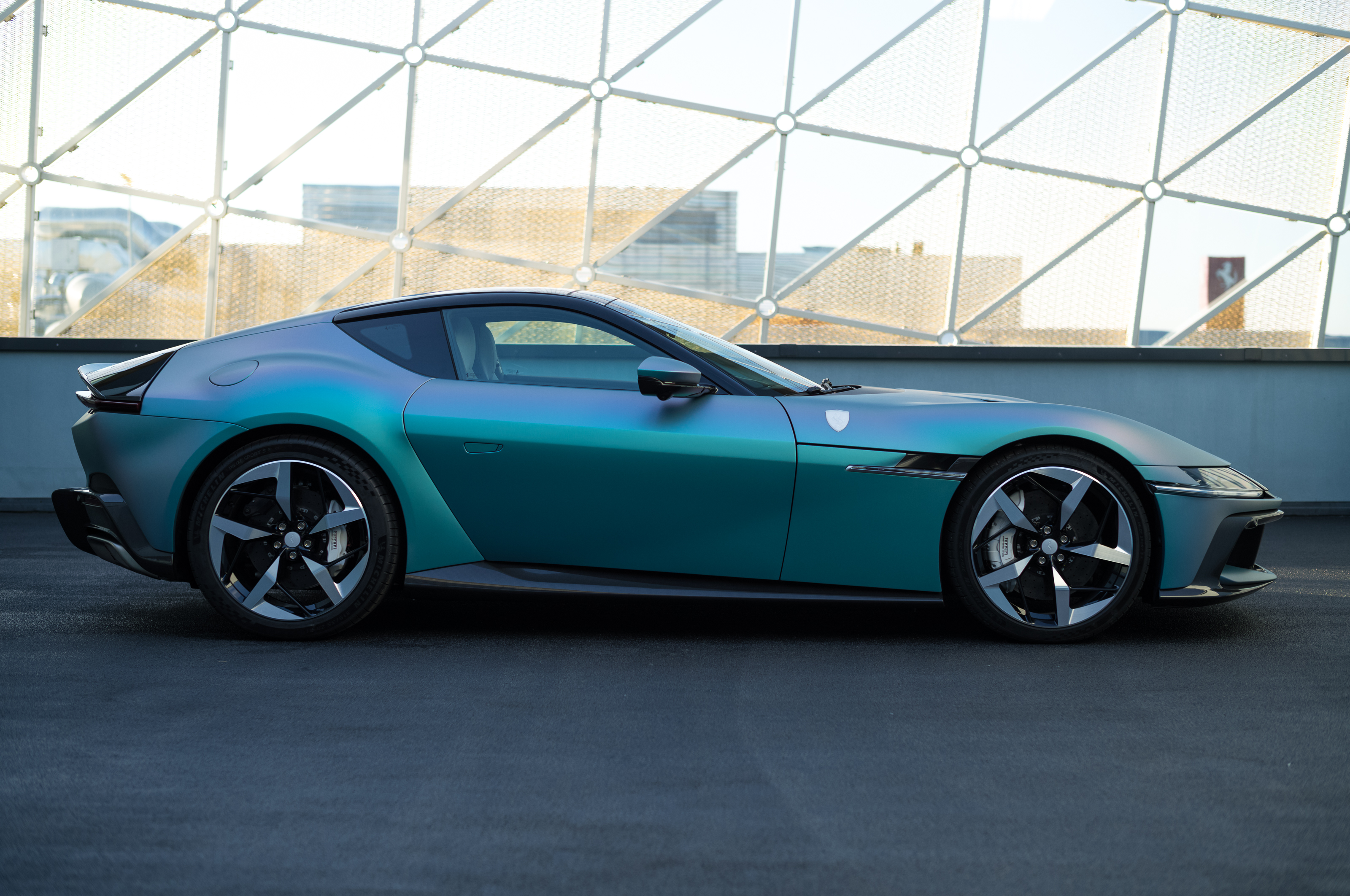
The Ferrari 12Cilindri Tailor Made was conceived, curated and creatively directed by COOL HUNTING and its founders Evan Orensten and Josh Rubin along with JaeEun “Jane” Lee and TaeHyun Lee. Over two years, Ferrari and the participating artists pursued an approach defined not by ornamentation but by cultural exchange. Technical experimentation and conceptual risk produced a genuine collaboration, generating outcomes that extend beyond the project itself.
At the center of this work is an inquiry into Korean identity. Global fascination with Korea has grown rapidly over the past decade, yet its cultural meaning resists fixed definition. Nations often articulate identity either through emblematic forms or through ongoing historical dialogue. Korea’s history spans the Three Kingdoms period, the five centuries of the Joseon dynasty, colonization, war, division and accelerated modernization. These experiences produced a culture shaped less by dominance than by endurance.

This condition is distilled in Goryeo celadon, described by Yi Gyu-bo as “green as emerald, brilliant as crystal.” Suspended between blue and green, its chromatic ambiguity reflects a sensibility positioned between extremes. From this emerges three forces: the connective spirit of jeong, the accumulated intensity of han, and the urgency of ‘ppalli-ppalli’ driving modernization. Together they define a culture of resilience and motion.
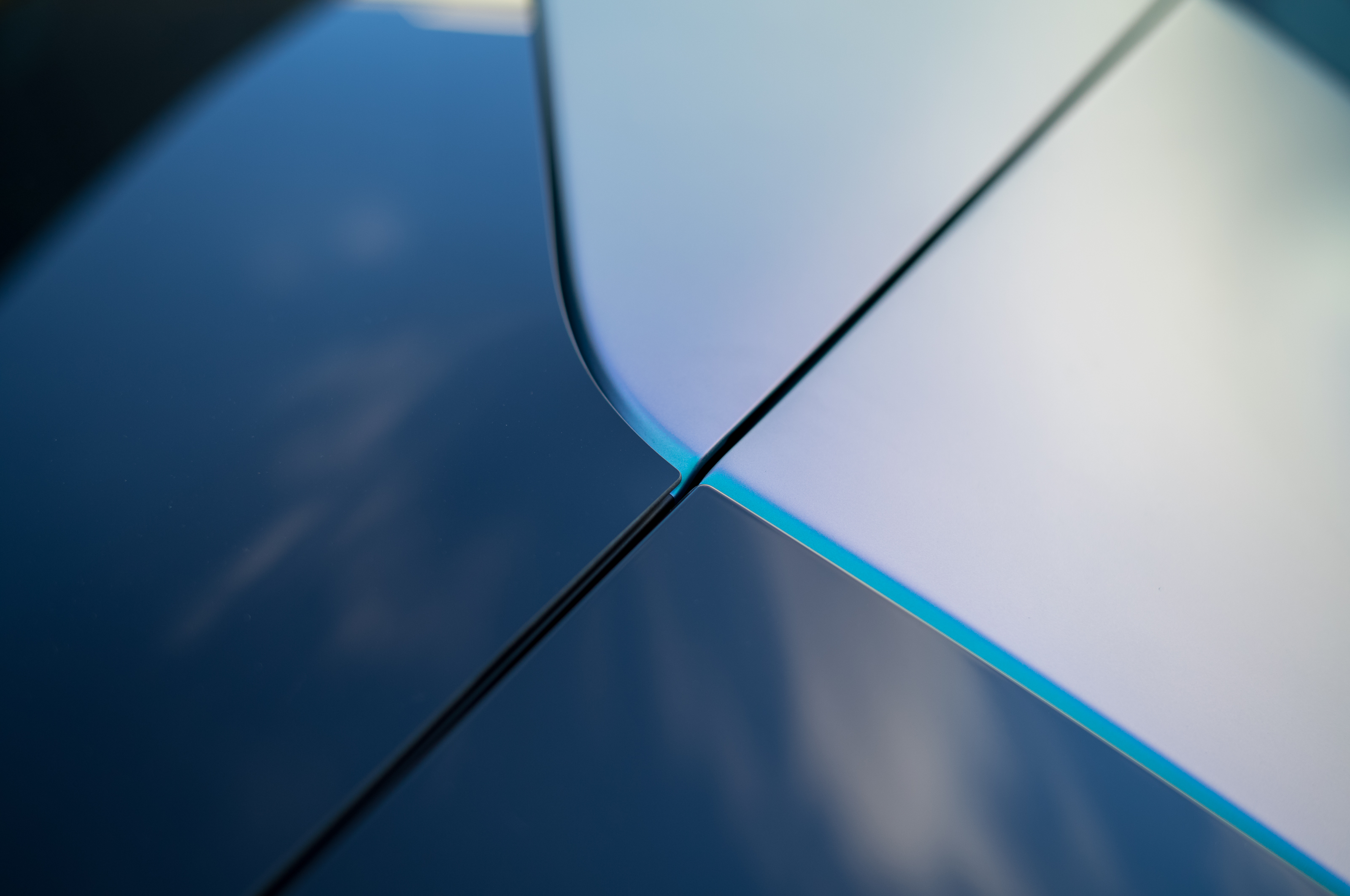
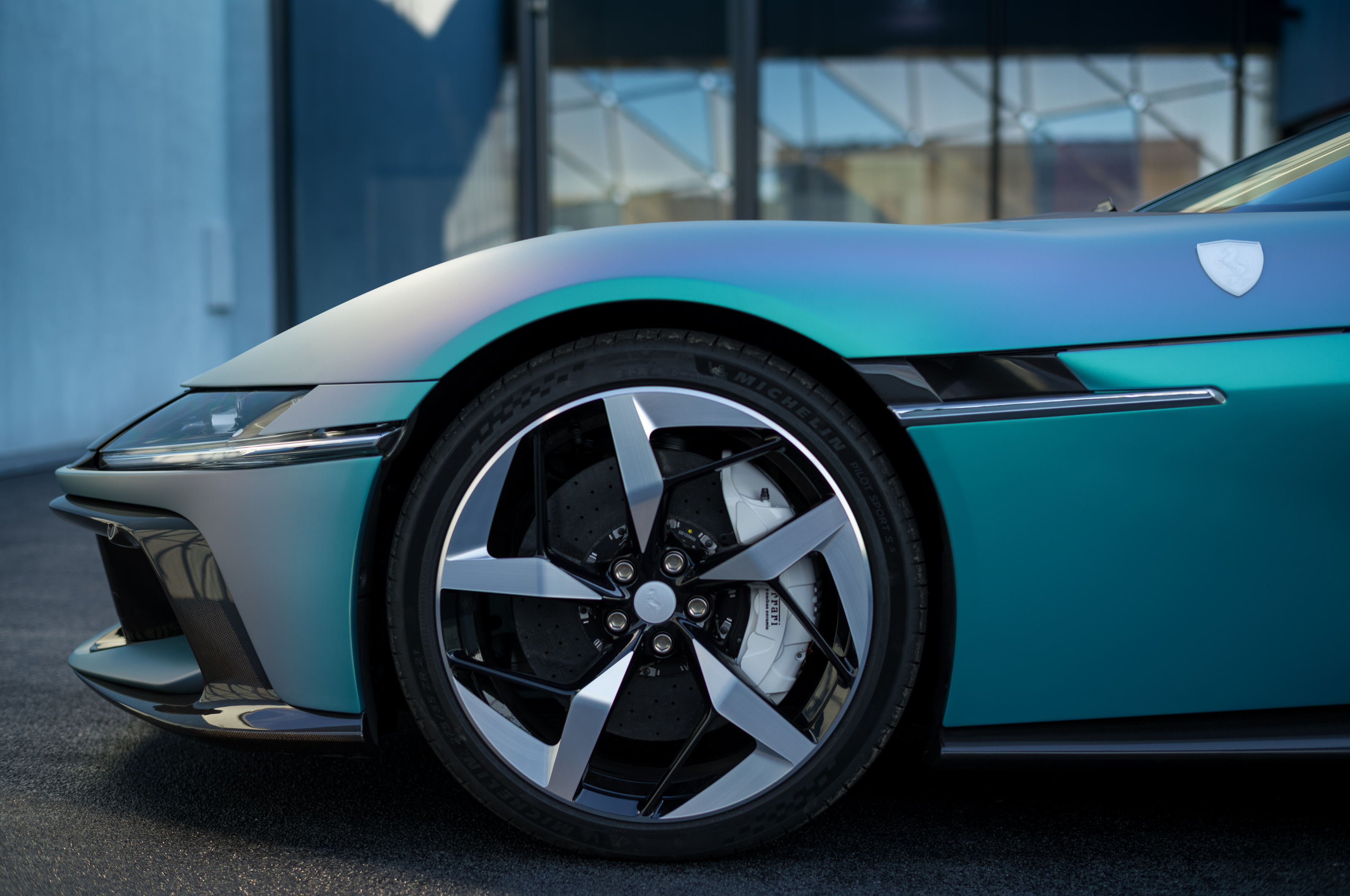
These qualities informed Yoonseul, a unique shade of a new transitional paint developed together with Ferrari and used in the 12Cilindri Tailor Made Korea for the first time. Rather than imposing a fixed appearance, the surface responds to light and environment, allowing the car to change its personality as it moves. Yoonseul reflects contemporary Korea as a nation shaped by fluidity and transformation, from the blue of the Han River to the neon-green of Seoul’s nightlife.

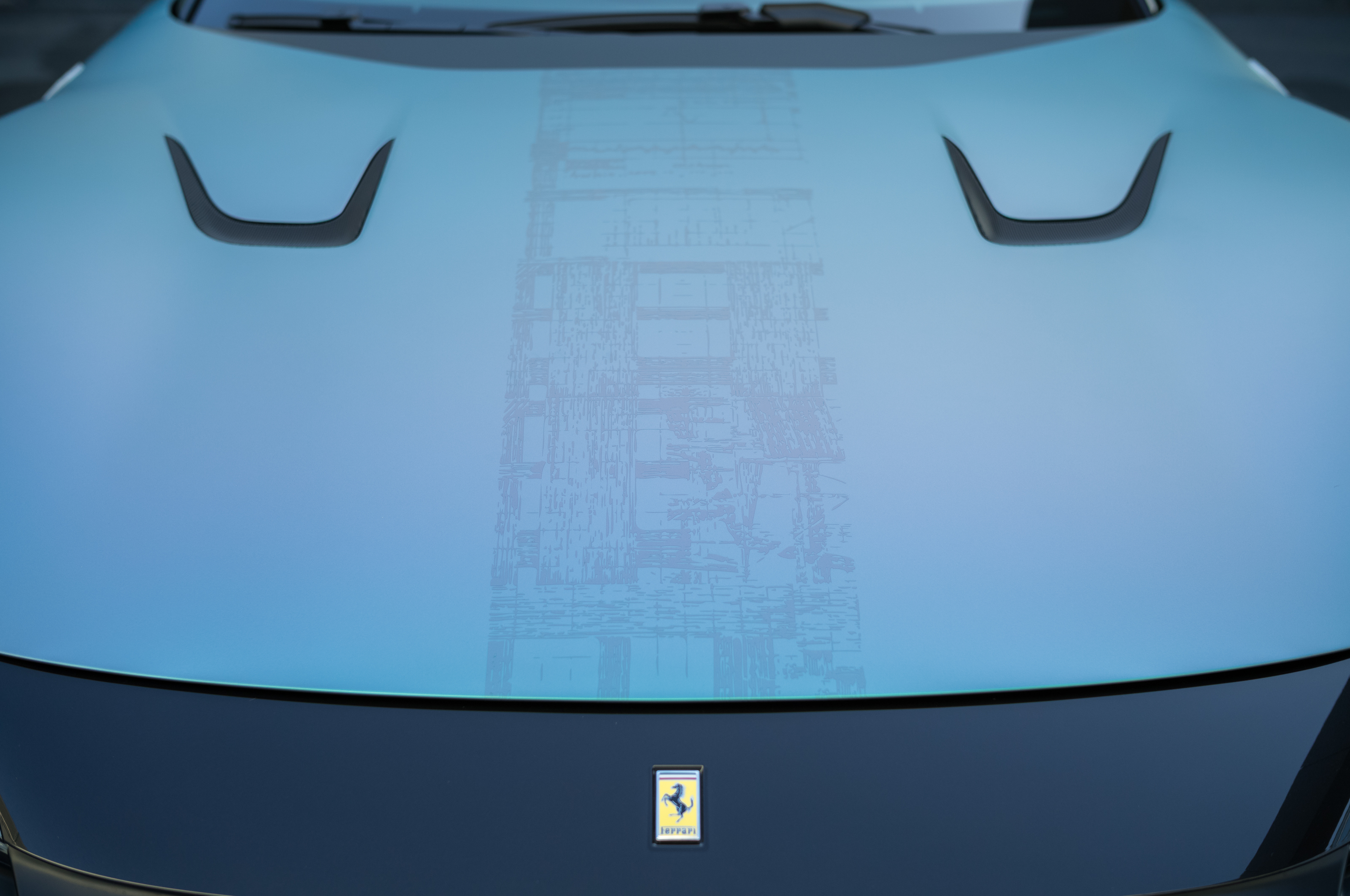
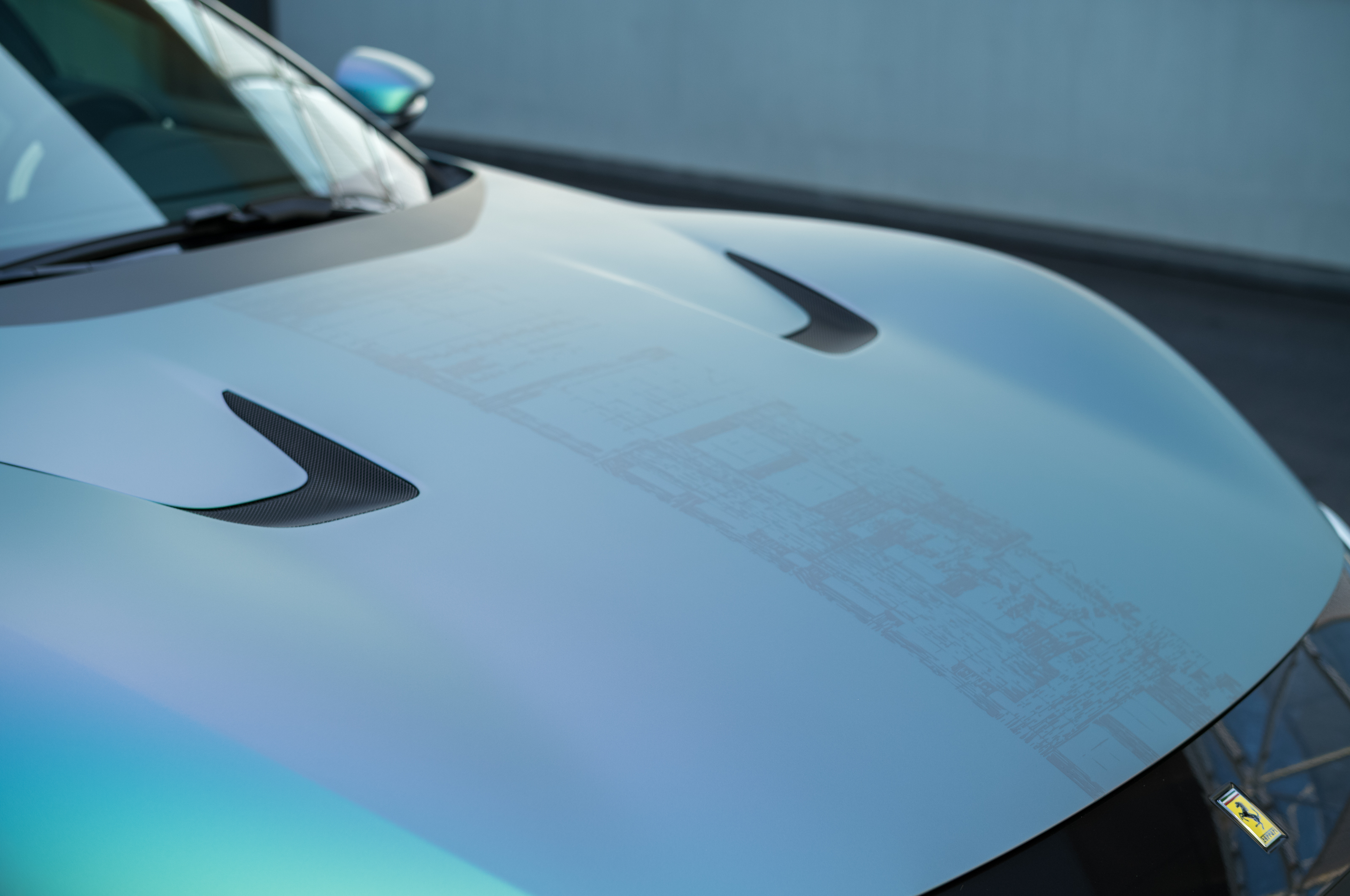
Within this dialogue, artists GRAYCODE, jiiiiin translated the sound and vibration of Ferrari’s engine into a musical score. Subtly painted on the bonnet of the Yoonseul-coated Ferrari 12Cilindri, the notation shifts with sunlight, revealing itself through movement and time. The score will be experienced as a multisensory performance during the event, and an original framed score accompanies the Tailor Made car.

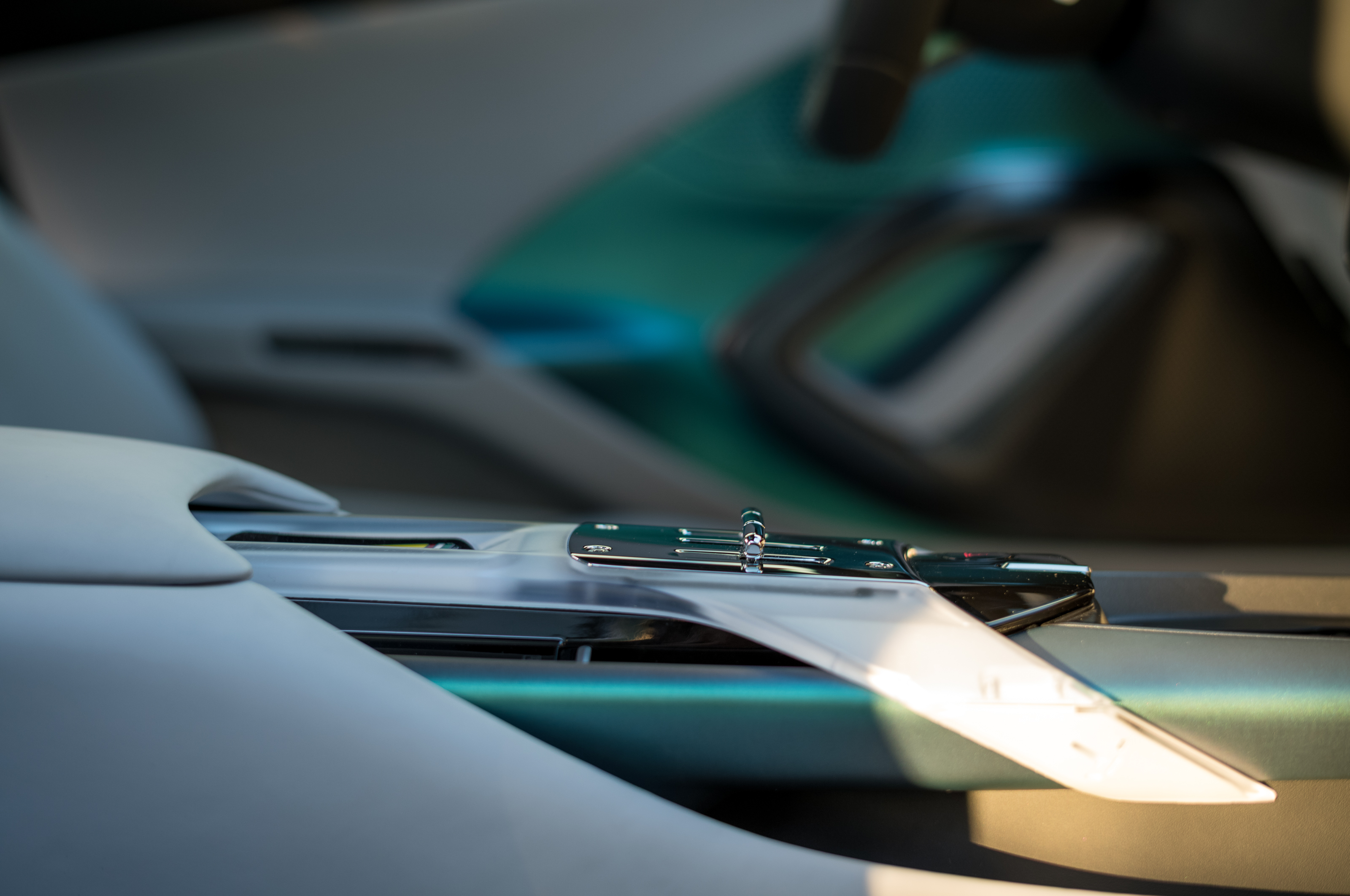
Beneath this surface lies a foundation of endurance. Ottchil, Korean lacquer, is difficult to extract and apply, yet yields exceptional durability when layered with patience. Resistant to heat, friction and penetration, it embodies survival across generations. Taehyun Lee inspired the painting of the paddle shifters and brake calipers where material resilience meets mechanical force.
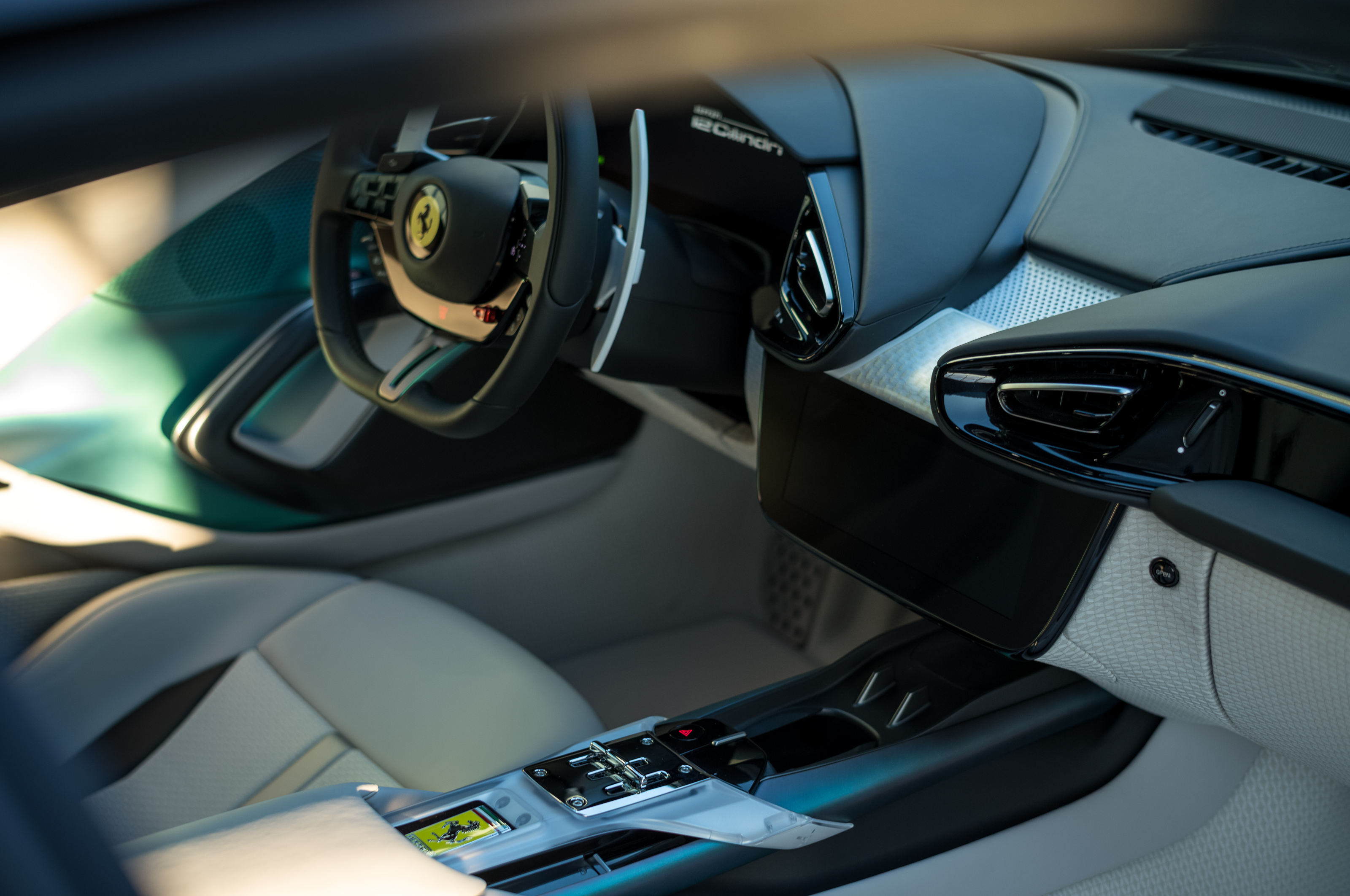
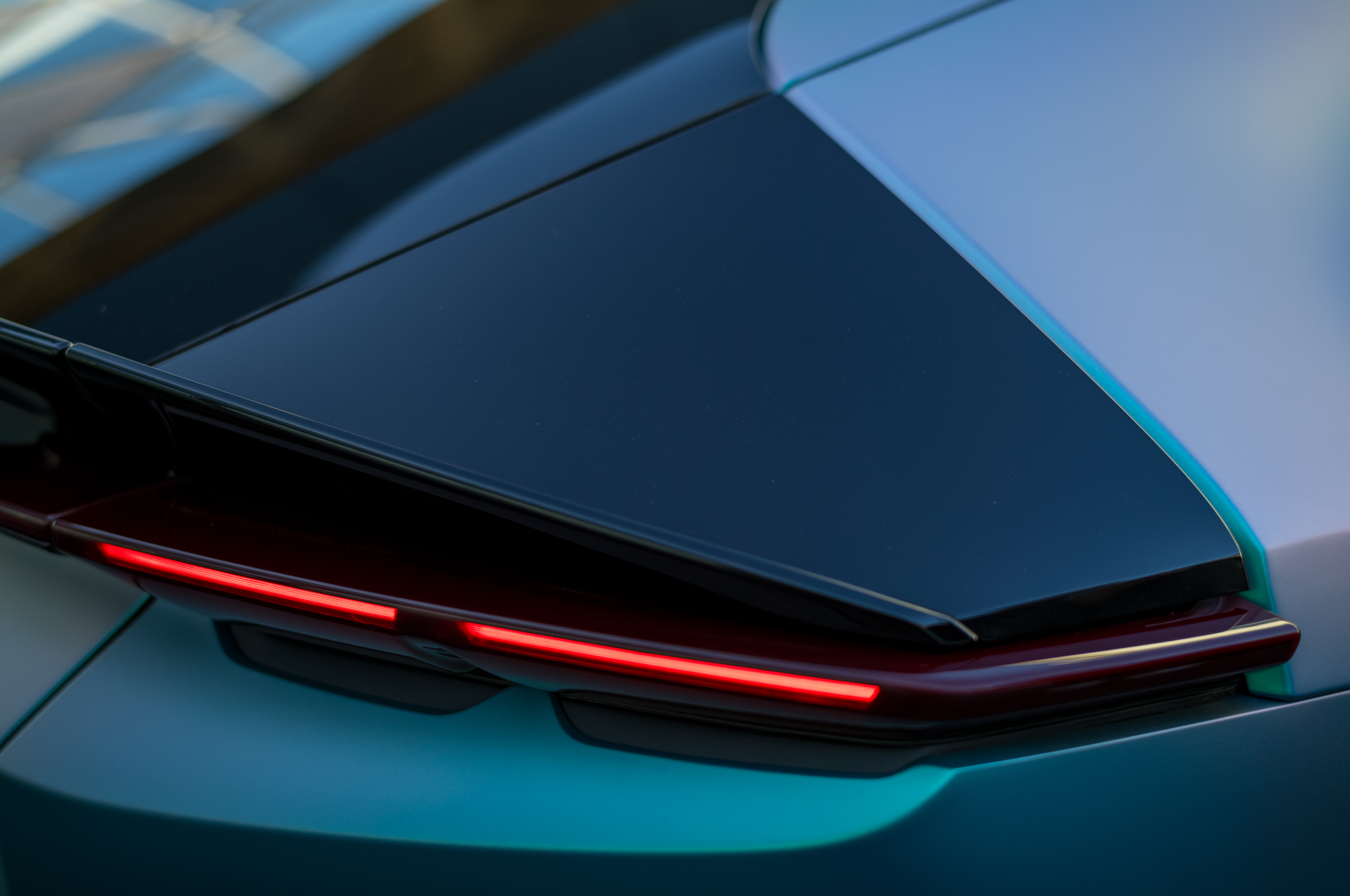
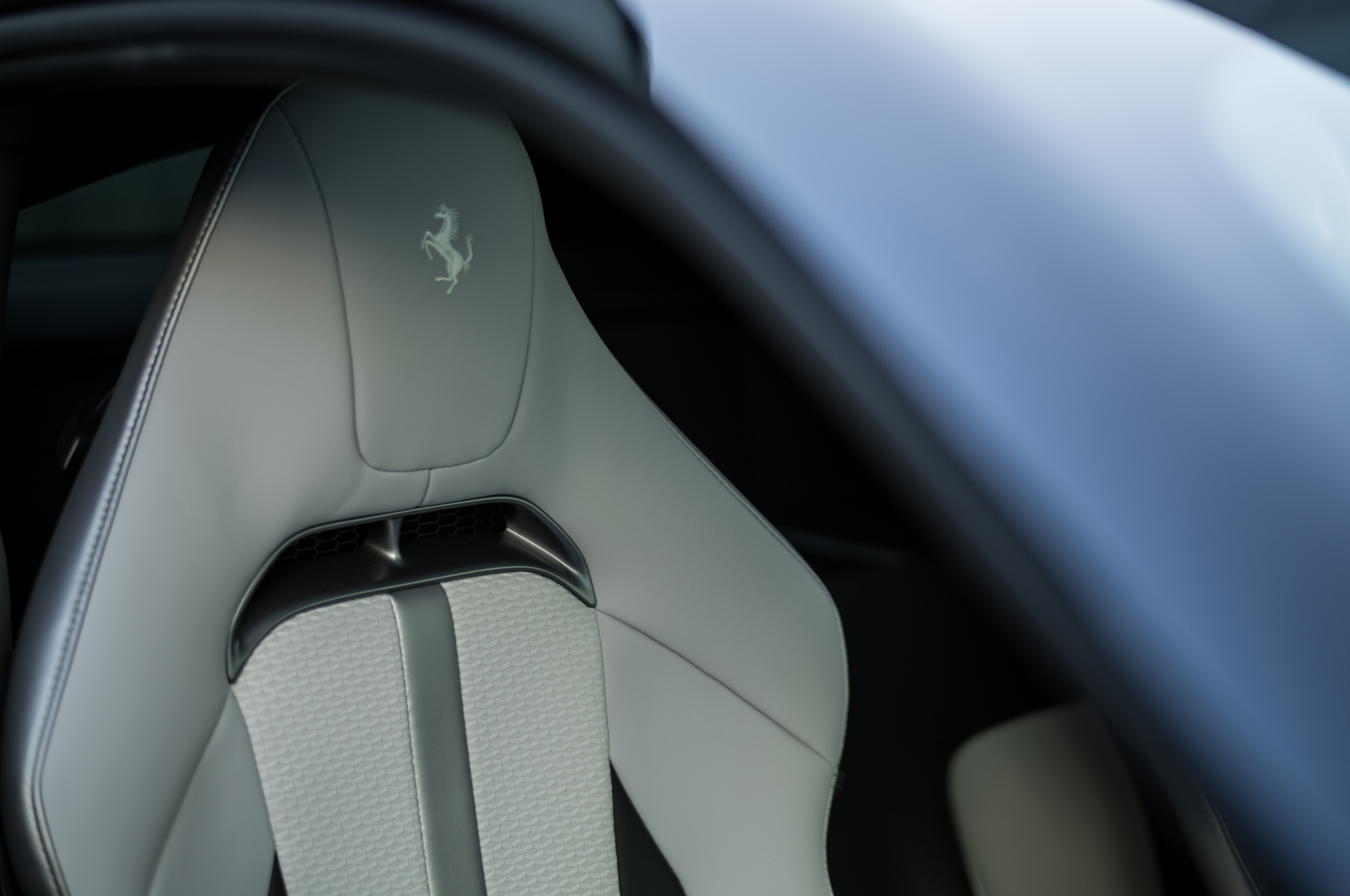
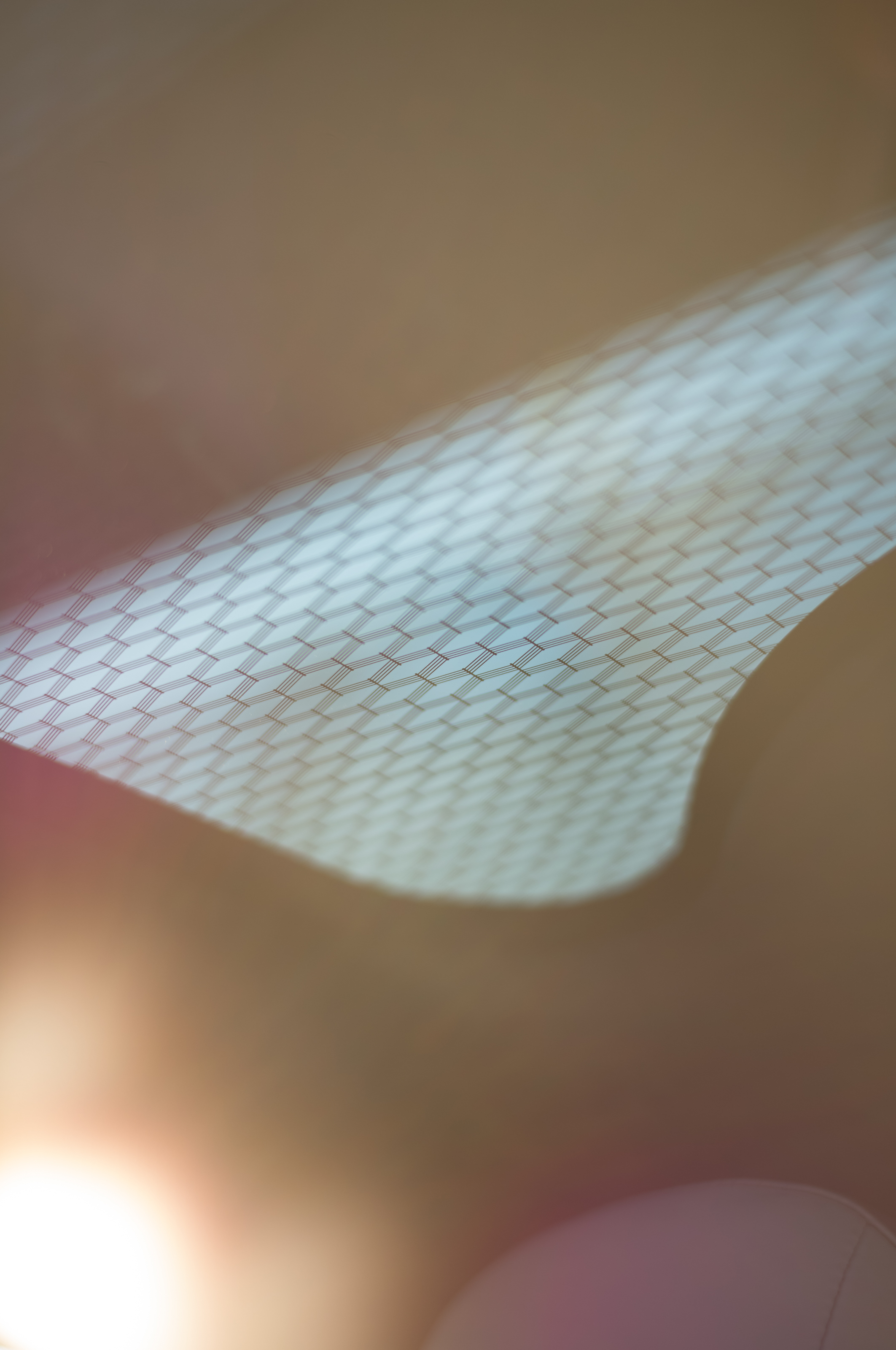
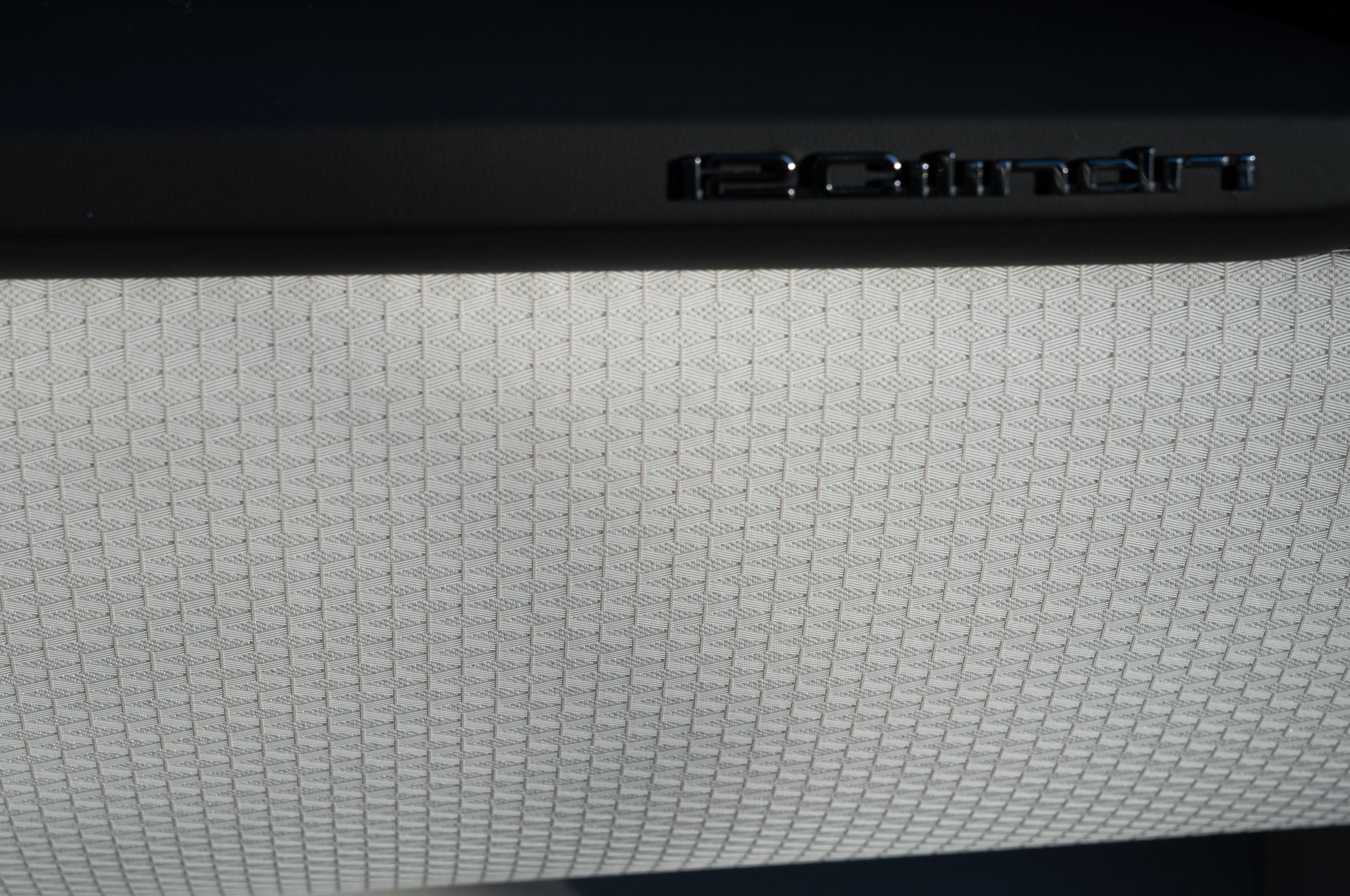
Solidarity forms another essential foundation. The concept of Danilminjok enabled Korea to withstand repeated invasions through collective cohesion. This spirit is expressed through Malchong, a horsehair braiding technique once reserved for Joseon-era aristocracy. Dahye Jeong reinterprets the craft as a contemporary structure of interconnection, integrating it into the dashboard and developing it into a new textile. The motif continues across the sunroof, which is screen printed using the same pattern, casting shifting shadows that echo Korea’s adaptive strength.
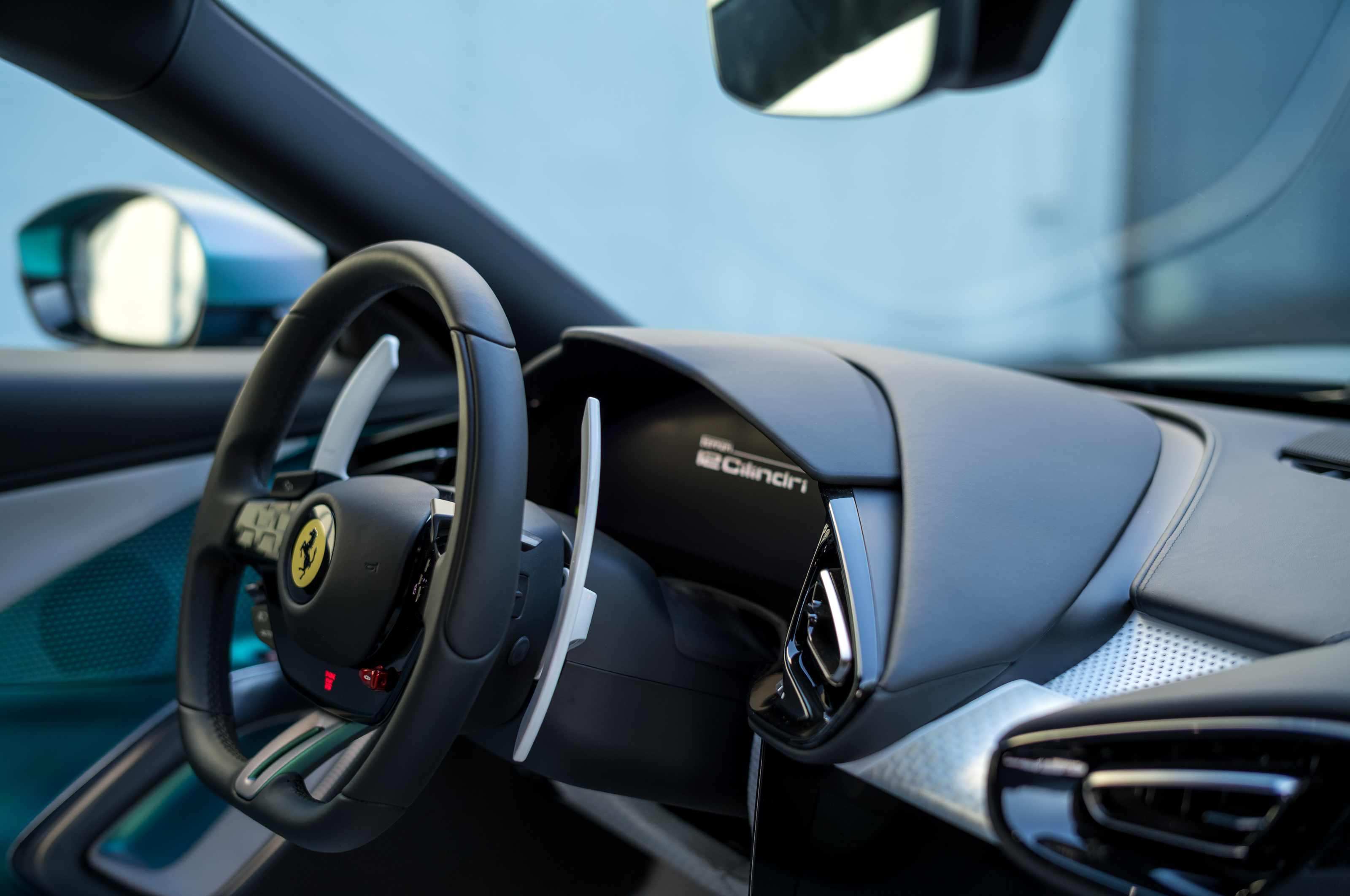
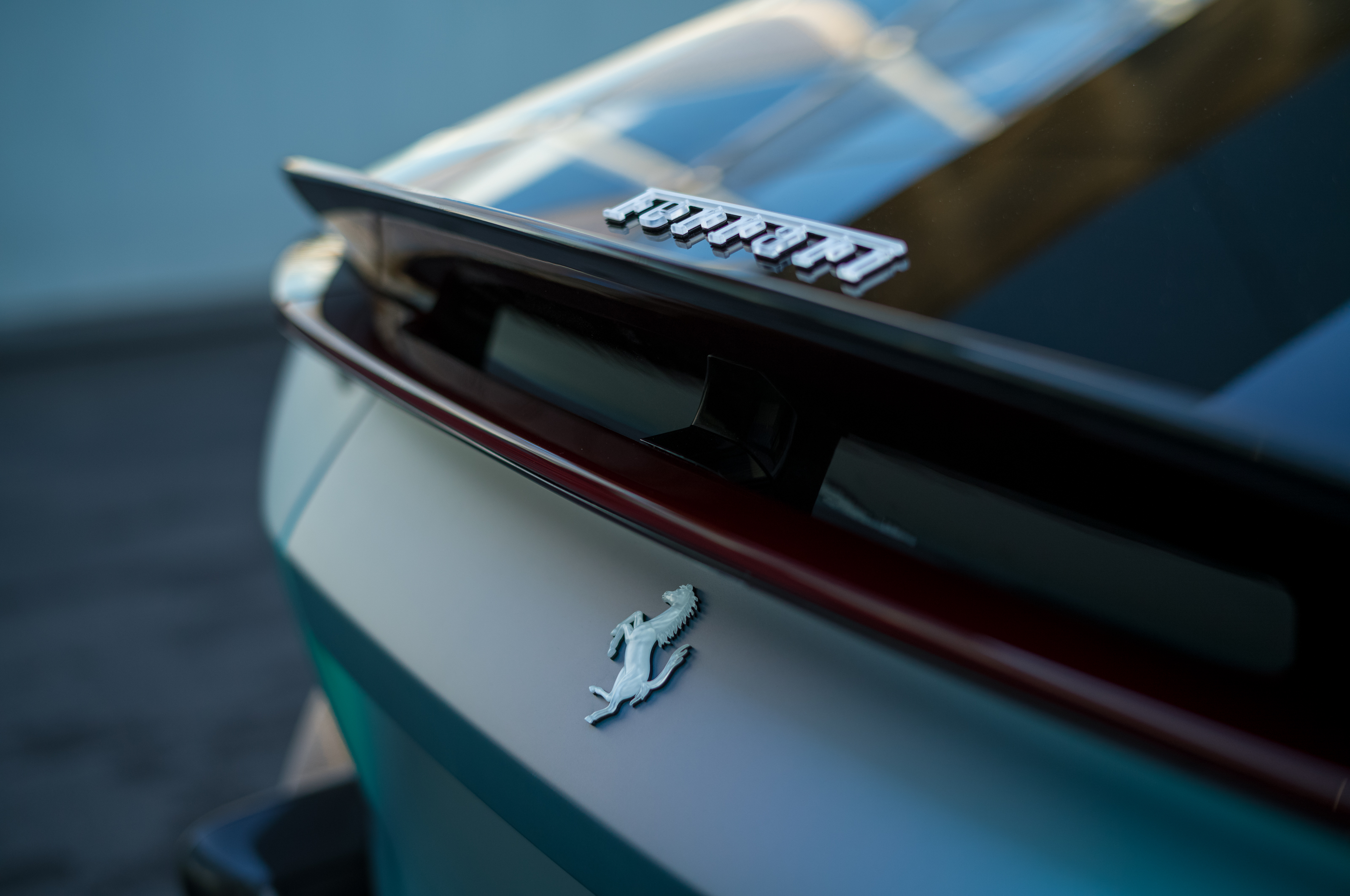
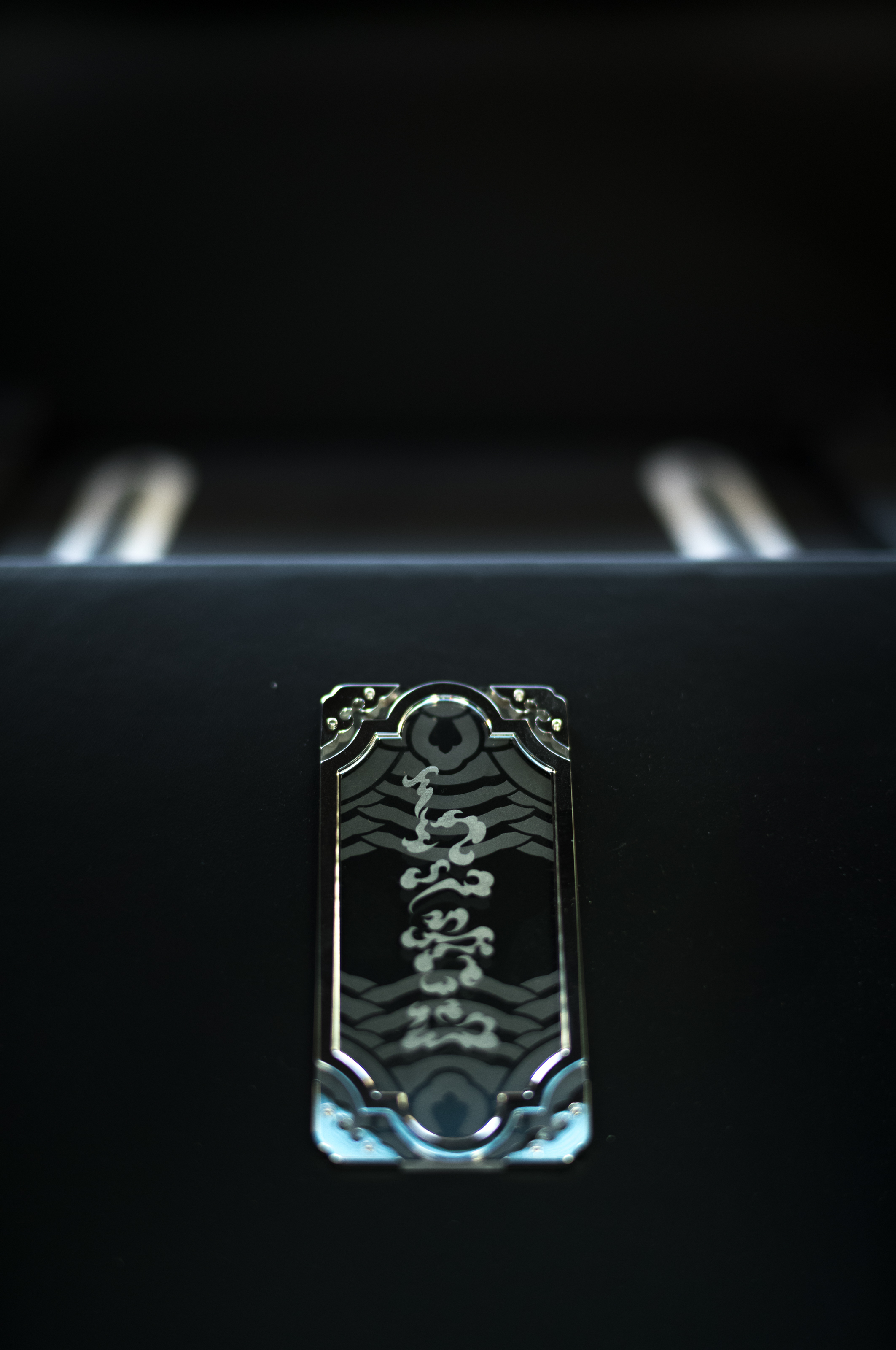
Tradition is not replicated but reexamined. Hyunhee Kim draws from the structural language of Joseon furniture, reinterpreting it through modern materials and proportions. Her influence appears in the vehicle’s stunning badging and continues throughout the interior. A bespoke chest in the trunk provides space for personal memories. This dialogue culminates in the 12 Han logo, “12 한,” derived from Munjado cloud forms, visualizing wind moving through twelve cylinders.

The Ferrari 12Cilindri Tailor Made Korea brings together lacquer tradition built through patience, braided horsehair shaped by solidarity, surfaces that hold memory and autonomy, and sound translated into visual and sonic form. Anchored in the shared principle “Inspired by Tradition, Driven by Innovation,” which is also the bespoke car’s name, the project aligns Korea and Ferrari through cultural memory as a means of moving forward.
PARTICIPATING ARTISTS
- TAEHYUN LEE
Slow and mindful in its application, lacquer offers a paradox for the 12Cilindri’s paddle shifters and brake calipers
TaeHyun Lee tests the boundaries of time, history and architecture with heritage. His works are iterations of his own philosophy and lived experience, grounded in the belief that materials are alive, not inert, each carrying a record of trauma, endurance and transformation.
At the centre of his work stands lacquer—a material defined by paradox. To harvest it, the tree must be cut and bled. From this wound emerges a resin that is toxic in its raw state, a bitter secretion defending the tree against intrusion. Once exposed to air and time, the substance cures into a luminous surface, impermeable and protective, endowed with the ability to preserve rather than repel. Each drop is scarce, amounting to only a handful of grams per year, and has long been compared to the “sacredness” of blood. To work with lacquer is to enter a rhythm of injury and healing, of patience, repetition and survival.
For Tae, this practice is also a cultural philosophy. Korea is often described as a “빨리빨리 (Ppalli Ppalli)” culture, one of acceleration. Yet speed is only perceptible because of the inherent slowness. In the same way, lacquered vessels endure because each layer was patiently applied, polished and reapplied across long cycles of time. Artifacts surviving intact in museums today testify that the fragile items can become eternal through such processes of repetition and waiting.
Tae extends these reflections to Ferrari’s comparable temporality. Its V12 engine, conceived in 1947, has been refined in a continuous lineage. Across decades, adjustments have been made, accumulations of small acts of tweaking and polishing culminating in today’s state-of-the-art masterpiece.
Through such parallels, Tae’s practice emerges as a meditation on time itself. His works oscillate between fragility and permanence, and their aesthetics have been applied to paddle shifters to integrate the philosophy of lacquer with the advanced materials available to Ferrari, resulting in white applications for the paddle shifters and brake calipers for the first time. Each piece proves that time is constant, while categories such as fast and slow exist only in relation to one another.
For Tae, repetition and waiting are not obstacles to creation but the very ground from which innovation, resilience and beauty emerge. In lacquer, he finds not just a medium but a philosophy: a way of showing that what dazzles in the present is often the fruit of patience, deep endurance and the paradox of wounds that harden into strength.
- DAHYE JEONG
A woven in horsehair artwork in a geometric pattern is the 12Cilindri’s dashboard centerpiece, and inspired the panoramic roof and custom textile
Dahye Jeong creates delicate sculptures, each painstakingly handcrafted over months from a single, unusual material: horsehair. Dahye refers to her process as “an investment of time,” the invisible material in her work, reflecting on herself as one who maintains the “sincerity of time” through her practice.
The technique Dahye uses dates back to the Joseon Dynasty (1392–1910) and was primarily used to create men’s hats that functioned as symbols of social status, such as the “갓” (gat), which has a cylindrical crown and a wide brim; the “망건” (manggeon), a band worn to secure the hair; and the “탕건” (tanggeon), a cap worn over the manggeon or under the gat, often used indoors. However, Dahye has adopted the horsehair weaving technique primarily for baskets and objects, reinterpreting the decorative vessel forms of comb-pattern pottery, another important craft in Korean history dating to the Neolithic era.
She discovered the technique during a program run by the Korea Craft & Design Foundation on South Korea’s Jeju Island, where she grew up. Using needles, Dahye weaves the hair into geometric patterns around a solid piece of wood made by her father in Jeju, determining the shape. This is then heat-treated, and the wooden core is removed to reveal the final work.
Dahye was drawn to what she describes as horsehair’s ‘strong’ and ‘powerful’ qualities realized through the alliance of patterns, which are similar to how Korea has withstood numerous hardships throughout history. These are also the ethos relentlessly pursued by Ferrari, so the craft has been delicately integrated into the 12Cilindri in three elements, showcasing resilience in various forms.
Dahye’s pattern has been woven in a new synthetic textile made in South Korea for the seats, used in a Ferrari for the first time, so the intricate layers of her pattern can be conveyed through tactile senses. Her pattern is also applied to the sunroof, as another first, casting beautiful shadows while driving and highlighting one of the key effects of her artworks. These variations are anchored in the original artwork, which is exhibited on the dashboard through meticulous engineering by Ferrari’s Tailor Made team.
This marks the pinnacle of her efforts reviving the traditional horsehair weaving technique by expanding its range of possible applications. It continues her significant international recognition, following her 2022 Loewe Foundation Craft Prize, a prestigious craft award that celebrates the contemporary evolution of traditional practices. Dahye has also won the Grand Prize at the Cheongju Craft Biennale 2021. Her work has been collected by the Foundation and the British Museum. She has been actively presenting her work worldwide, including at Milan’s Salone del Mobile and London’s Craft Week.
- HYUNHEE KIM
Translucent, ethereal treatments ground the interior design and elevate the exterior badging and branding of the 12Cilindri
Hyunhee Kim presents contemporary discourse on the notion of memory and identity through the transformation, dismantling and redefinition of traditional Korean furniture. Through her internationally renowned series, White Nostalgia, Hyunhee seeks to capture the essence of sentimentality embodying longing and remembrance of one’s roots alongside the spectacles of modern society.
Hyunhee’s artistic vision transcends sentimentality, delving into modern discourse. In her Ancient Future series, she reflects on how femininity was often associated with weakness or silence. This was exemplified by Gyubang furniture (female room furniture), in which the pieces were designed to captivate women indoors, limiting their physical and social boundaries. By tearing down the walls she blurs the boundary between the exterior and the interior to express the autonomous aspects of modern society.
This dialogue continues in her White Nostalgia series, where she signals a shift in the meaning of the color white in Korean society. Traditionally, Koreans were described as “백의민족 (Baegui Minjok),” the “people of white clothing.” White 한복 (Hanbok), a traditional Korean costume, was historically the most popular. A strong Confucian belief emphasized a stoic lifestyle, leading people to uphold the value of purity portrayed in white. Now, through Hyunhee’s work, the color is interpreted as the amalgamation of different identities one may hold, much like light turns white as various shades accumulate, much like how Korea defines its identity with the assembly of various aspects.
In bold defiance of this historical context, Kim dismantles existing walls and barriers of traditional furniture while leaving delicate decorations layered onto transparent materials, allowing people to look back on the past. By doing so, her works subtly reveal the power of memories one holds within, transforming traditional Korean furniture into works that embrace both nostalgia and autonomy.
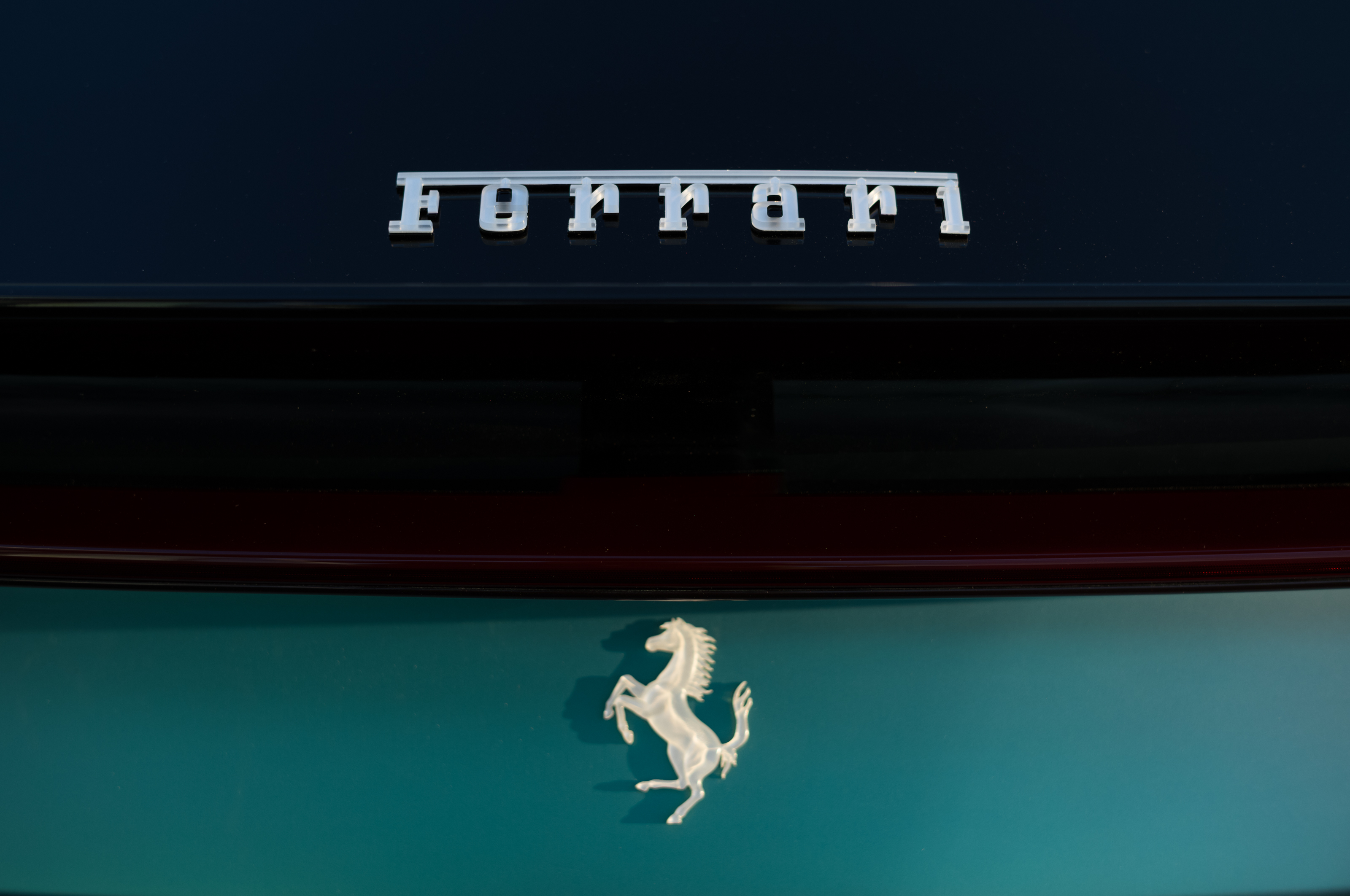
Hyunhee applies her half-transparent, ethereal white aesthetic vision to the car in both its interior and exterior design, reflecting Korea’s modern spirit, shimmering in light while embracing the complex identity the country has built in recent years. It also inspired Ferrari to design the Cavallino and Long F badging in translucent white for the first time in its history, along with the white emblems on the wheels.
Hyunhee created a dedication plate featuring a logo she designed that is mounted behind the seats. Its style was drawn from 문자도 (Munjado), a traditional calligraphic art form that integrates images related to the characters’ meanings. Honoring the significance of the V12 engine, she borrowed shapes of clouds to write “12”, making an analogy to the wind that travels through 12 cylinders to generate the engine’s 830 hp. It is paired with “한 (Han),” the first letter of “한국 (Hanguk),” signifying the spirit of Koreans.
An original artwork is delivered in the trunk. <함 (HAM)>, a traditional cask for valuable and meaningful items, is included for the collector to store memories of his experiences with this car. This piece also holds an object in the form of a Ferrari key customized to her visual language, so that the owner can fully experience her varied and original practices in connection with Ferrari.
- GRAYCODE, jiiiiin
The 12Cilindri’s engine notes interpreted as music, deconstructed and reimagined in a unique notation format as the vehicle’s livery
GRAYCODE, jiiiiin is an artistic duo of artists and electro-acoustic music composers. Employing subtle nuances of sound vibrations, pressure dynamics and musical tension as their artistic language, they craft works transpositioning the invisible realm of sound into an audible and immersive reality.
Their works are conveyed through vibration and undulation of sonic waves. They begin with harvesting structural sonic elements using devices they build, ranging from rare analogue tape recorders to state-of-the-art instruments they construct themselves. Each device is carefully fabricated to precisely capture the sonic landscapes they observe, echoing the ethos of 12Cilindri Tailor Made Korea: “Inspired by Tradition, Driven by Innovation.”
The data are then extended into visual and experiential forms to provide an immersive experience for the audience. Their visual elements, most prominently represented in the form of scores, serve as guidelines for performance that completes the work. Their notations deviate from the traditional musical scores by foregoing the notion of time and direction. Each sound particle is activated during the performance at the moment when all sonic moments coincide.
For Ferrari, GRAYCODE, jiiiiin conducted these processes to unfold their unique visual and performative interpretations of the V12, often noted as “the soul of the car.” After analyzing the V12’s sonic characteristics, they created the sound work <Music or 12 Lines>. This piece, recorded on magnetic reel tape, and its original score will be given to the owner to admire and enjoy. This unique drawing is also painted on the bonnet, beneath which the engine is installed, creating a unique livery that’s painted one shade darker than the body.
The score subtly reveals different aspects on top of Ferrari’s unprecedented transitional paint and color, Yoonseul. This unique effect highlights the multi-persona nature of contemporary Korean society, presenting numerous different characteristics across industries. It also alludes to Korea’s malleable persona shaped over history as a means of survival against countless political, economic and cultural invasions.
The artwork will be performed during the launch, marking their continued success after a solo exhibition 《∆w》 at Songeun Art and Cultural Foundation, Seoul, 2023, 《Data Composition》 at Sejong Museum of Arts, Seoul, 2021, 《Time in Ignorance, ∆T≤720》 at PS Sarubia, Seoul, 2020, 《10^-33cm》 at Koreanisches Kulturzentrum, Berlin, 2019, among many others. The group has presented its works at the Art Sonje Center, Nam June Paik Art Center, and Gyeonggi Museum of Modern Art. Their performance 《Quivering Air》 (2025) was also recognized as ARKO Selection, and they received the esteemed Giga-Hertz Production Prize (2018) from ZKM in Karlsruhe with 《+3×10^8m/s, beyond the light velocity》.
More about the project
Jane was a curator who selected the participating artists and managed the project’s execution by overseeing the communication, application, and mediation of their visions with COOL HUNTING and Ferrari. She developed the curatorial concept for an in-situ exhibition, embedding their works in the vehicle as a mobile group exhibition space. The curatorial narrative and writings presented above were also written by her, as well as Yoonseul, the name of the transitional paint, reflecting her lifelong inquiry into how to represent Korea’s sociocultural identity through the voices of the artists and creative direction by COOL HUNTING. Lastly, Jane oversaw the reveal event held in Seoul, Korea, January 19-21, 2026.
Articles
- Robb Report | This One-Off Ferrari Is a Vibrant 819 HP Ode to Korean Culture
- Financial Times | Ferrari interprets Korean aesthetics, unveils 12Cilindri Tailor Made
- The Herald Business | Ferrari unveils Yoonseul-inspired Ferrari 12Cilindri Tailor Made, a masterpiece created exclusively for Korea
- Hypebeast | Ferrari unveils the world’s only 12Cilindri Tailor Made reinterpreting Korean aesthetics
- Auto Times | Ferrari unveils one-off 12Cilindri Tailor Made for Korea
- Seoul Auction Blue | The one and only Ferrari embodying K-aesthetics
- [Photo] Ferrari unveils 12Cilindri Tailor Made inspired by Korean art
- Ferrari 12Cilindri Tailor Made elevated through Korean art as a flagship supercar
- Supercar inspired by Goryeo celadon and K-pop”… Ferrari unveils Ferrari 12Cilindri Tailor Made
- Ferrari unveils 12Cilindri infused with Korean traditional aesthetics
- Ferrari unveils 12Cilindri Tailor Made inspired by Korean craftsmanship
- Ferrari 12Cilindri Tailor Made embodying craftsmanship
- Ferrari unveils one-off ‘Yoonseul’ 12Cilindri Tailor Made for Korea
- Interior of the Ferrari 12Cilindri Tailor Made
- Thibault Dussarrat, head of Ferrari Korea, delivers a welcome address
- Ferrari 12Cilindri Tailor Made, a one-off masterpiece for Korea
- Ferrari 12Cilindri Tailor Made, a one-off masterpiece for Korea
- Unveiled Ferrari 12Cilindri Tailor Made
- Thibault Dussarrat, head of Ferrari Korea, delivers a welcome address
- Ferrari unveils Ferrari 12Cilindri Tailor Made
- Unveiled Ferrari 12Cilindri Tailor Made
- Ferrari unveils one-off masterpiece Ferrari 12Cilindri Tailor Made for Korea
- Ferrari unveils one-off masterpiece Ferrari 12Cilindri Tailor Made for Korea
- Ferrari unveils one-off masterpiece Ferrari 12Cilindri Tailor Made for Korea
- Ferrari V12 infused with Korean aesthetics, 12Cilindri Tailor Made Korea
- Ferrari praises Korean aesthetics, unveils Ferrari 12Cilindri Tailor Made created exclusively for Korea
- Ferrari world’s only Ferrari owned by a Korean revealed, “a tribute to Korea”
- Ferrari unveils one-off masterpiece Ferrari 12Cilindri Tailor Made for Korea
- Ferrari designer Flavio Manzoni unveils new model in Korea, “a masterpiece created for Korea”
- Ferrari unveils one-off 12Cilindri infused with Korean tradition and innovation
- Ferrari unveils one-off 12Cilindri Tailor Made infused with Korean aesthetics
- Ferrari design chief highlights “the most suitable form of beauty for performance”
- Ferrari 12Cilindri Tailor Made blending Ferrari heritage with the spirit of Korea
- Ferrari unveils 12Cilindri Tailor Made infused with Korean tradition
- Ferrari brings 12Cilindri to Korea for Korean customers
- Ferrari unveils 12Cilindri Tailor Made, a one-off Ferrari shaped by Korea
- Ferrari unveils Korea-exclusive one-off 12Cilindri Tailor Made
- Ferrari unveils 12Cilindri Tailor Made, a one-off work of art created for Korea
- Ferrari unveils 12Cilindri finished in ‘Yoonseul,’ a sea-toned hue inspired by Goryeo celadon
- Ferrari unveils Ferrari 12Cilindri Tailor Made
- Ferrari unveils Ferrari 12Cilindri Tailor Made
- Ferrari unveils Korea-exclusive one-off 12Cilindri Tailor Made
- Ferrari unveils one-off masterpiece Ferrari 12Cilindri Tailor Made for Korea
- “From Goryeo celadon to neon signs,” Ferrari unveils a one-off model capturing the allure of Seoul
- Ferrari unveils 12Cilindri Tailor Made, a one-off V12 Ferrari embracing contemporary Korean art
- “Built as a one-off for Korea,” Ferrari unveils 12Cilindri Tailor Made
- Ferrari unveils one-off 12Cilindri Tailor Made for the first time
- Ferrari unveils Korea-exclusive one-off 12Cilindri Tailor Made
- Ferrari unveils the world’s only 12Cilindri Tailor Made
- Ferrari unveils a V12 work of art embracing “K-heritage,” marking a “quantum jump” in its Korea market strategy
- “Built as a one-off for Korea,” Ferrari unveils 12Cilindri Tailor Made at world premiere
- A one-off work of art created by Ferrari for Korea
- Ferrari 12Cilindri inspired by Korea
- “An iridescent color” Ferrari unveils a one-off bespoke Ferrari created for Korea
- A one-off Ferrari 12Cilindri Tailor Made created for Korea
- Docent tour of Ferrari’s one-off 12Cilindri Tailor Made
- A Ferrari Korea edition? Unreal!!!
- Ferrari’s first attempt created for Korea
- What would it look like if Ferrari expressed Korea?
- Seeing the one and only Ferrari in the world in person
- The one and only most Korean Ferrari, 12Cilindri Tailor Made
- Real look at the ultimate custom ‘only one’ Ferrari
- Ferrari’s Korean reinterpretation 12Cilindri Tailor Made land in Korea
- Legendary Ferrari designer comes to Korea with Goryeo celadon
- Ferrari’s supercar produced exclusively for Korea
- A one-off Ferrari 12Cilindri Tailor Made created for Korea
- Meeting of traditional lacquer and supercar! Ferrari reveals definitive edition of ‘true love’ for Korean market
- This car is the only Ferrari of its kind in the world
- This Ferrari exists only in Korea, Ferrari 12Cilindri Tailor Made
- Ferrari debuts 12Cilindri Tailor Made infused with Korean aesthetics in Korea
- “Only in Korea” Ferrari unveils 12Cilindri Tailor Made
- Ferrari speaks through “one-off,” Tailor Made created for Korea
- Ferrari unveils one-off 12Cilindri Tailor Made infused with Korean tradition at world premiere
- Ferrari unveils Korea-dedicated 12Cilindri Tailor Made at world premiere
- Ferrari unveils Ferrari 12Cilindri Tailor Made ‘reinterpreting Korean tradition’
- Ferrari unveils Ferrari 12Cilindri Tailor Made for Korea
- Ferrari dressed in “Yoonseul”…
- Ferrari embraces the pure Korean word “Yoonseul,” adopted as an official name
- Ferrari unveils Ferrari 12Cilindri Tailor Made… “capturing Korean tradition and dynamic modernity”
- Ferrari unveils Ferrari 12Cilindri Tailor Made infused with Korean art
- How Ferrari honors Korea, first unveiling of a custom 12Cilindri, price?
- “An iridescent color” Ferrari unveils a one-off bespoke Ferrari created for Korea
- Ferrari unveils one-off masterpiece Ferrari 12Cilindri Tailor Made for Korea
- Ferrari unveils one-off masterpiece Ferrari 12Cilindri Tailor Made for Korea
- [On site] “V12 engine and K-art,” Ferrari unveils 12Cilindri Tailor Made
- Ferrari unveils one-off 12Cilindri Tailor Made infused with Korean tradition
- Why bring the world’s only Ferrari work of art to Korea? Ferrari 12Cilindri Tailor Made
- “Yoonseul”-named V12 Ferrari unveiled at world premiere
- A one-off 12Cilindri created for a Korean owner already sold?
- Ferrari 12Cilindri Tailor Made, a work created for Korea
- Korea premiere! Ferrari 12Cilindri Tailor Made
- “Sincere about Korea,” Ferrari 12Cilindri Tailor Made capturing the lights of Seoul
- Ferrari designer Flavio Manzoni says, “We broke the rules solely for Korea. Two years of collaboration was truly moving”
- Inspired by Goryeo celadon… Ferrari unveils a KRW 600 million supercar
- Korean beauty’ interpreted by Ferrari
- Ferrari 12Cilindri Tailor Made unveiled
- Masterpiece for Korea ‘Ferrari 12Cilindri Tailor Made’
Credits
- Pictures: Josh Rubin for COOL HUNTING
- Videos: Mike Laidman
- Music: Measure 90, 2026, GRAYCODE, jiiiiin
 Jane Lee